About 174 minutes
A Gray Eye or So. In Three Volumes—Volume III — A Reader’s Guide
Historical Psychological Social Fiction
39,938 recorded words. 3 minutes difference from this book's estimate.
View Gutenberg source #51946
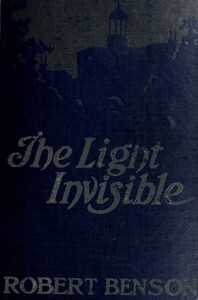
For The Light Invisible — A Closer Reading, the stored edition analysis reports 40,553 words, 2 hr 57 min estimated reading time, and 18 detected text sections.
The text analysis averages about 21.5 words per sentence, while the detected sections provide another way to judge how the source is divided.
Project Gutenberg metadata also associates the work with “Clergy -- England -- Fiction,” connecting these edition facts with the source record’s subject description.
Explore this collection
These alternatives are selected using recorded categories and estimated reading time.
About 174 minutes
Historical Psychological Social Fiction
39,938 recorded words. 3 minutes difference from this book's estimate.
View Gutenberg source #51946About 173 minutes
Historical Psychological Social Fiction
39,729 recorded words. 4 minutes difference from this book's estimate.
View Gutenberg source #51945About 186 minutes
Historical Psychological Social Fiction
42,694 recorded words. 9 minutes difference from this book's estimate.
View Gutenberg source #51923Search stored excerpts and compare books → Choose by your preferences →
Choices use stored catalog measurements. Estimates vary with reading speed. A shared category is a catalog label, not a claim that two books have the same argument or literary quality.
Search reads excerpt text stored with this catalog and links to its associated Gutenberg record. The connection is stored in the site database; this tool does not recheck that every excerpt is word-for-word identical to that external record. Excerpt search does not cover every chapter and does not verify historical publication dates.
Catalog snapshot checked: 2026-09-25. Coverage: 97 public books, 97 available source excerpts.
Read the complete public-domain text at its original source.
Read on Project GutenbergThe preface to The Light Invisible establishes a distinctive narrative frame: the author presents himself as a reporter of another priest's experiences, not a creator of fiction. This narrator insists his friend's 'power' was 'no more than a particular development of a faculty common to all who possess a coherent spiritual life.' The stories that follow are thus offered as case studies in a kind of spiritual perception that manifests in 'directly sensible forms'—visions, voices, physical sensations. The excerpts show a prose style that moves between matter-of-fact reportage and intense interiority, often tracking the priest's bodily responses—a 'strong, almost physical, oppression' or a 'curious sensation'—as signals of supernatural presence.
The protagonist is defined less by action than by receptivity. In the excerpt concerning Lord B., the priest does not arrive with arguments; he 'had resolved to be guided as usual by the interior monitor.' His confidence comes not from rhetorical preparation but from a felt sense of direction that 'increased to an extent that almost terrified him.' Benson renders this as a physical experience: 'a strong, almost physical, oppression carried him forward.' The priest's body becomes a barometer of spiritual pressure, and his interior state—anger crushed down, silence maintained—is the real drama. This emphasis on somatic response over intellectual debate marks a departure from conventional clerical fiction of the period.
Benson uses dialogue sparingly but precisely. In the smoking-room scene, Lord B.'s words are few and cutting: 'Well, here's the parson at last, sermon and all.' The priest's silence is itself a form of reply, and the narrator notes that 'he had not, he said, an idea what to say or do, so he stood and waited.' The exchange is less about information than about power—the insult, the laughter, the command to 'say what you came to say, and go.' The priest's eventual response, when it comes, is not quoted; the excerpt cuts away. This withholding forces the reader to attend to the atmosphere and the priest's interior state rather than to plot resolution.
The physical environment in the excerpts is charged with meaning. The priest approaches Lord B.'s house 'under the dripping yellow branches' on a 'rainy autumn afternoon.' Inside, the smoking-room is arranged as a hostile stage: 'a circle of men, some in shooting costume, and some as if they had not been out all day, sitting in easy chairs round the fire.' The fire, the cigarettes, the casual dress—all signal a domestic space turned into a theater of humiliation. Yet the priest's sensations shift as he moves through the house: the oppressive feeling 'seemed to diminish a little' in the corridor, only to return 'the moment he had crossed the threshold' of the smoking-room. Benson maps spiritual states onto architectural thresholds.
The preface is not merely a framing device; it is a theological argument. Benson's narrator is at pains to insist that his friend's experiences never 'contravene Divine Revelation' and that 'entire submission to the Divine Teacher upon earth' must precede the exercise of spiritual faculties. The deliberate reversal of this order is labeled 'Protestantism in its extreme form.' This defensive posture suggests that the stories to follow might be read as potentially heterodox—too close to private revelation or spiritual enthusiasm. By foregrounding orthodoxy, Benson signals that the tales are meant to explore the boundaries of permissible spiritual experience within a Catholic framework, not to challenge it.
Readers approaching The Light Invisible should attend to the interplay between the preface's doctrinal caution and the stories' experimental sensibility. Benson's priest is neither a skeptic nor a mystic in the Romantic sense; he is a trained theologian whose perceptions are filtered through a disciplined obedience. The tension between institutional authority and personal intuition generates the collection's central drama. The excerpts offer only fragments of longer narratives, but they reveal a writer deeply interested in how the supernatural might be rendered in naturalistic prose—through bodily sensation, spatial detail, and the rhythms of conversation.
I’ve often thought of Father Benson’s priest, who feels the divine as a pressure on his skin, in the quiet company of The Nine of Hearts: A Novel — Reading Notes. That book’s unease is less about ghosts than about the hearts we build around ourselves. Both whisper that the unseen announces itself most clearly through the subtle ache of ordinary days.
A brief reflection can help important ideas stay with you longer.