About 61 minutes
The Wheels of Time — Background and Themes
Historical Psychological Social Fiction
13,973 recorded words. 20 minutes difference from this book's estimate.
View Gutenberg source #56965
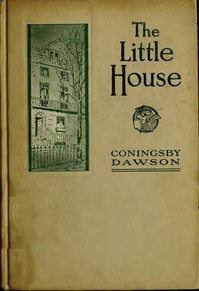
This digital edition of The Little House — Reading Notes is described by source-level measurements including 18,624 words, 1 hr 21 min estimated reading time, and 3 detected text sections.
The text analysis averages about 14.6 words per sentence, while the detected sections provide another way to judge how the source is divided.
Project Gutenberg metadata also associates the work with “Christmas stories,” connecting these edition facts with the source record’s subject description.
Explore this collection
These alternatives are selected using recorded categories and estimated reading time.
About 61 minutes
Historical Psychological Social Fiction
13,973 recorded words. 20 minutes difference from this book's estimate.
View Gutenberg source #56965About 117 minutes
Historical Psychological Social Fiction
26,861 recorded words. 36 minutes difference from this book's estimate.
View Gutenberg source #54660About 118 minutes
Historical Psychological Social Fiction
26,967 recorded words. 37 minutes difference from this book's estimate.
View Gutenberg source #57644Search stored excerpts and compare books → Choose by your preferences →
Choices use stored catalog measurements. Estimates vary with reading speed. A shared category is a catalog label, not a claim that two books have the same argument or literary quality.
Search reads excerpt text stored with this catalog and links to its associated Gutenberg record. The connection is stored in the site database; this tool does not recheck that every excerpt is word-for-word identical to that external record. Excerpt search does not cover every chapter and does not verify historical publication dates.
Catalog snapshot checked: 2026-09-25. Coverage: 97 public books, 97 available source excerpts.
Read the complete public-domain text at its original source.
Read on Project GutenbergThe Little House opens with an unusual narrator: the house itself. Speaking after midnight, when stairs crack and windows rattle, the house claims to remember everything that happened within its walls. It introduces itself as a small London house near Hyde Park, almost two hundred years old, and promises a Christmas story with a happy ending—one it says it helped bring about. The narrative voice is chatty, intimate, and slightly old-fashioned, addressing readers who might not believe a house can talk. This framing device sets up a story that blends domestic realism with a touch of whimsy, as the house recounts the lives it has sheltered.
The house's narration is not merely decorative; it actively shapes how events are presented. It claims to have interfered to produce the happy ending, and it measures time by counting births and love-makings on its stairs. When it gets the count wrong, doors and windows correct it. This personification gives the setting a memory and a will. The house describes itself as having known ups and downs, from the era of sedan-chairs to the present of red motor-buses. Its voice is consistent: it uses phrases like “we houses” and addresses readers who “go to bed too early.” This choice of narrator allows the story to comment on events with the authority of a long-lived observer, while also creating a cozy, slightly magical atmosphere.
The excerpt of the reunion scene shows careful attention to dialogue and gesture. The American officer's knock is described as “Rat-tat-tat!” and the house notes it seemed to say, “Come along. Don't keep me waiting.” The widow's hesitation is shown through small actions: she opens the door “only a little way at first,” then “a few more inches.” Their exchange is marked by polite awkwardness—he laughs, she apologizes for having treated him suspiciously. The officer's missing arm is revealed through the widow's gaze: “his flattened left side, where the sleeve was tucked limply into the tunic-pocket.” She decides she must pretend not to have noticed. The dialogue is understated; he says he is “learning to manage,” and she helps him remove his coat. The emotional weight is carried by what is left unsaid.
Several details recur across the excerpts, linking the house's past to the present. The officer mentions the house was empty when he first saw it; the widow later took it because she “liked it from the first.” The house itself recalls earlier eras, like the link-boys escorting ladies in sedan-chairs. The officer's luminous wrist-watch and the mention of an air-raid place the story during World War I. The widow's children are referenced indirectly: she compares the officer to Robbie, who hides his face against a special place when telling something difficult. These small, repeated elements—the knock, the empty house, the war injury—create a texture of memory that the house, as narrator, weaves together.
The house announces early that it is telling a Christmas story and that it was responsible for the happy ending. This frames the narrative as a kind of confession or reminiscence, not a straightforward plot. The story is told in retrospect, with the house knowing the outcome. The structure is episodic: the house counts events on its stairs, and the narrative moves from general history to specific scenes. The excerpts show a shift from the house's general musings to a detailed, almost theatrical scene of the officer's arrival. The house's voice remains present throughout, commenting on the action. This structure invites the reader to trust the house's perspective, even as it admits to getting details wrong sometimes.
Readers should attend to the house's voice as a character in its own right, not merely a framing device. Its observations about the widow and the officer are filtered through its own long memory and its desire to claim credit for the happy ending. The story rewards attention to small physical details—the knock, the coat, the wrist-watch—and to the gaps in dialogue where characters avoid saying what they feel. The house's claim that “not a line is invented” invites the reader to consider how memory and storytelling shape even the most ordinary events.
Days after finishing The Little House — Reading Notes, I kept thinking about how its walls held a single, luminous reunion so privately. That same quiet persistence of memory—how places and people carry stories they never fully tell—lingers in The Thirteen Travellers — Themes and Context, though it approaches from a different door. One house’s creak, another train’s halt—both simply leaving me feeling oddly accompanied.
A brief reflection can help important ideas stay with you longer.