About 81 minutes
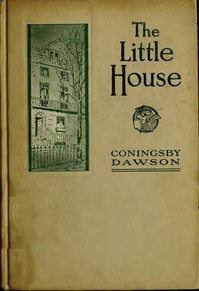
The Little House — Reading Notes
Historical Psychological Social Fiction
18,624 recorded words. 20 minutes difference from this book's estimate.
View Gutenberg source #50274
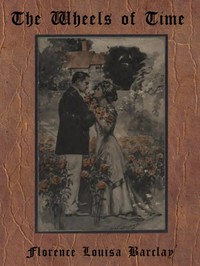
The source record for The Wheels of Time — Background and Themes measures this digital text at 13,973 words, 1 hr 1 min estimated reading time, and 2 detected text sections.
The text analysis averages about 17.1 words per sentence, while the detected sections provide another way to judge how the source is divided.
Project Gutenberg metadata also associates the work with “Physicians -- Fiction,” connecting these edition facts with the source record’s subject description.
Explore this collection
These alternatives are selected using recorded categories and estimated reading time.
About 81 minutes
Historical Psychological Social Fiction
18,624 recorded words. 20 minutes difference from this book's estimate.
View Gutenberg source #50274About 117 minutes
Historical Psychological Social Fiction
26,861 recorded words. 56 minutes difference from this book's estimate.
View Gutenberg source #54660About 118 minutes
Historical Psychological Social Fiction
26,967 recorded words. 57 minutes difference from this book's estimate.
View Gutenberg source #57644Search stored excerpts and compare books → Choose by your preferences →
Choices use stored catalog measurements. Estimates vary with reading speed. A shared category is a catalog label, not a claim that two books have the same argument or literary quality.
Search reads excerpt text stored with this catalog and links to its associated Gutenberg record. The connection is stored in the site database; this tool does not recheck that every excerpt is word-for-word identical to that external record. Excerpt search does not cover every chapter and does not verify historical publication dates.
Catalog snapshot checked: 2026-09-25. Coverage: 97 public books, 97 available source excerpts.
Read the complete public-domain text at its original source.
Read on Project GutenbergThe opening of The Wheels of Time introduces a doctor's wife, Flower, through her boudoir—a space described as 'delicate green and white, a mossy carpet, masses of spring flowers; cool, soft, noiseless, fragrant.' This interior stands in deliberate contrast to the sounds of patients arriving: the 'agitated clang' of the bell, Stoddart's subdued voice, and the 'heavy, depressed foot' crossing the hall. The catalog lists 'Physicians -- Fiction' and 'Husband and wife -- Fiction,' but the excerpts focus less on medical practice than on the wife's perspective and the couple's dynamic, especially her guilt over not accompanying him to Brighton.
The catalog subject 'Physicians -- Fiction' might lead a reader to expect a narrative centered on medical cases or professional dilemmas. Yet the excerpts offer no clinical detail; the doctor's work is reduced to sounds—the bell, the closing door, the turning of pages in the waiting room. Instead, the text dwells on Flower's boudoir and her interior monologue. She recalls her husband calling her 'my lovely, fragrant Flower' and her insistence that patients' germs not enter the dining room. The physician's identity is mediated entirely through his wife's memory and domestic arrangements. The story, at least in these sections, is about her emotional landscape, not his.
Flower's internal debate after declining to accompany her husband to Brighton reveals a mind caught between self-reproach and rationalization. She thinks: 'It was odious of Jane to call him "Boy" and to pretend to understand his needs better than she, his own wife, did.' The passage moves through a series of justifications—blaming the nurse's changed plans, praising her son's loyalty, and finally imagining another woman at the Metropole. The catalog subject 'Women -- Conduct of life -- Fiction' is evident here, but the excerpts show conduct as a private, anxious negotiation rather than a set of rules. Flower's thoughts oscillate between guilt and self-exoneration, a pattern that may define her character arc.
The park 'sang of springtime, of life and love and joys to come,' yet Flower feels 'selfish and inadequate.' The natural world is not merely backdrop but a contrast to her mood. Earlier, the boudoir's 'cool, soft, noiseless, fragrant' quality mirrors her desire for a controlled, pleasant environment, while the waiting room's 'Landseer engraving' and 'bound volumes of Punch' suggest a sterile, masculine space. The catalog includes 'England -- Social life and customs -- Fiction,' and these details—rose-gardens, Wimpole Street, the Metropole—ground the story in Edwardian domesticity. Yet the setting is always filtered through Flower's perception, making it a tool for psychological revelation rather than social documentation.
Readers approaching The Wheels of Time through its catalog subjects should note that the excerpts prioritize interiority over action. The physician's world is glimpsed only through his wife's consciousness, and the 'conduct of life' theme is rendered as a private, often contradictory stream of thought. The text rewards attention to small details—a dimple, a packet of sandwiches, a child's remark—that carry emotional weight. These fragments suggest a narrative driven by the tension between what Flower feels and what she admits, rather than by plot events.
Reading this note on Florence Barclay, I remembered sitting with my grandmother’s old copy of The Wheels of Time, sensing that hush of a wife’s unspoken worries between the walls. It reminded me of Hugh Walpole’s quieter rooms in The Young Enchanted: A Romantic Story — Key Ideas to Explore, where longing also lingered behind drawn curtains, never demanding to be heard, only felt.
Capture what you thought, learned, and would like to remember.