About 497 minutes
The Luck of the Vails: A Novel — Reading Companion
Historical Psychological Social Fiction
114,107 recorded words. 16 minutes difference from this book's estimate.
View Gutenberg source #57690
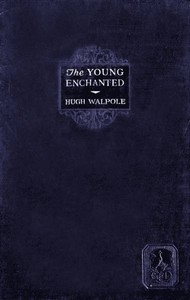
The Young Enchanted: A Romantic Story — Key Ideas to Explore can be approached with a clearer sense of reading commitment from its source measurements: 117,906 words, 8 hr 33 min estimated reading time, and 11 detected text sections.
The text analysis averages about 14.4 words per sentence, while the detected sections provide another way to judge how the source is divided.
Project Gutenberg metadata also associates the work with “London (England) -- Fiction,” connecting these edition facts with the source record’s subject description.
Explore this collection
These alternatives are selected using recorded categories and estimated reading time.
About 497 minutes
Historical Psychological Social Fiction
114,107 recorded words. 16 minutes difference from this book's estimate.
View Gutenberg source #57690About 492 minutes
Historical Psychological Social Fiction
113,053 recorded words. 21 minutes difference from this book's estimate.
View Gutenberg source #51947About 535 minutes
Historical Psychological Social Fiction
122,933 recorded words. 22 minutes difference from this book's estimate.
View Gutenberg source #54404Search stored excerpts and compare books → Choose by your preferences →
Choices use stored catalog measurements. Estimates vary with reading speed. A shared category is a catalog label, not a claim that two books have the same argument or literary quality.
Search reads excerpt text stored with this catalog and links to its associated Gutenberg record. The connection is stored in the site database; this tool does not recheck that every excerpt is word-for-word identical to that external record. Excerpt search does not cover every chapter and does not verify historical publication dates.
Catalog snapshot checked: 2026-09-25. Coverage: 97 public books, 97 available source excerpts.
Read the complete public-domain text at its original source.
Read on Project GutenbergFrom the first page, Hugh Walpole anchors his story in a single, telling detail: Henry Trenchard's pince-nez, which 'never properly fitted his nose' and 'coloured his whole life.' This small, recurring object—half vanity, half vulnerability—sets the tone for a novel that builds character through physical and emotional specificity. The opening scene at Piccadilly Circus, with its vanished omnibus stop and lingering crowd, immediately establishes a London caught between pre-war habit and post-war flux.
Walpole's prose moves between sharp observation and interior monologue, as when Peter, standing outside Selfridge's, is 'frozen into immobility by the power of his desire' for Millie. The narrative voice shifts fluidly from ironic commentary on artistic pretension to raw, unguarded longing, suggesting a work less concerned with plot machinery than with the texture of inner life.
Walpole introduces Henry Trenchard through his pince-nez, a device that does more than signal short-sightedness. The narrator notes that had Henry worn 'large, round, moon-shaped' spectacles, he 'would have seen life steadily and seen it whole'—but his 'rather pathetic vanity' prevents it. This is not mere character description; it is a thesis about perception. The pince-nez, always 'at the crisis of falling to the ground,' becomes a metaphor for Henry's precarious hold on clarity. Throughout the excerpts, Walpole returns to physical objects as keys to inner states: Peter's 'blue-faced window-pane' after reading Millie's letter, the 'pearl-grey' Oxford Street under 'sheeted stars.' These details are never decorative; they are the grammar of the novel's emotional logic.
Peter's section in Book II offers the most concentrated example of Walpole's method. The narrative slips into free indirect discourse, merging Peter's voice with the narrator's: 'Why should he not long for Millie?' The prose becomes breathless, repetitive, almost incantatory—'Theirs was the Age. Theirs the Kingdom, the Power and the Glory.' Walpole uses short, staccato sentences to convey Peter's agitation: 'He was married. But that was such years ago.' The physical setting—'shuttered windows of Selfridge's'—anchors the emotional crisis. When Peter reads Millie's engagement letter, the response is not described but enacted: 'he switched off the light and sat on, staring at the blue-faced window-pane.' The object (the window) and the action (switching off light) carry the weight of the reaction.
Walpole's dialogue is sparse in the excerpts but telling. Millie's letter to Peter is written in a voice that is breezy, self-aware, and slightly formal: 'I do hope you'll like him. I'm sure you will.' The phrase 'Bunny (that's Baxter)' suggests a private code, a world of nicknames and easy intimacy. In contrast, Victoria's line—'You ought to have told me about it before, dear'—carries a different social register: proprietary, affectionate, slightly reproachful. The narrator's commentary on Campbell, who 'was a bit of a fool, too fat, too prosperous, too anxious to be popular,' reveals a habit of summing up characters through their social mannerisms. Walpole is less interested in what people say than in how their speech reveals their place in a generational and emotional landscape.
Though the excerpts never describe a battlefield, the shadow of the First World War is everywhere. The novel is set in 1920, and the characters move through a London that is physically unchanged but psychically transformed. The omnibus stop that 'no longer' exists, the 'vague sense all the rest of the day of having been cheated'—these are small, almost subliminal markers of loss. Peter's thought that 'great artists are never happy' and his dismissal of Campbell's 'narrative gift' as mere amusement suggest a generation questioning the value of art after catastrophe. Millie's engagement announcement—'so selfish when the world is in such a mess'—acknowledges the guilt of happiness. Walpole does not state these themes; he embeds them in the rhythm of daily life, in the way his characters pause, hesitate, and look for meaning in a world that has shifted beneath them.
Readers coming to The Young Enchanted should attend to the spaces between events—the moments when characters stand still, look at windows, or read letters. Walpole's novel is built not from dramatic confrontations but from the accumulation of such quiet, telling instants. The pince-nez, the shuttered shopfront, the blue window-pane: these are the true protagonists. The story moves forward through what is seen and half-seen, through the tension between what characters say and what they feel. It rewards a patient, observant reading—one that watches, as Henry does, for the right moment to cross.
I remember standing on a rainy street once, feeling ordinary in a way that ached, much like Peter’s longing in Oxford Street. That precise weight of wanting—so quiet, so physical—returned when I read The Disappearance of Kimball Webb — A Closer Reading. It caught the same flicker, that small, unsayable ache of being left behind by one’s own life.
A brief reflection can help important ideas stay with you longer.