About 419 minutes
Scandal — Story, Setting & Ideas
Historical Psychological Social Fiction
96,362 recorded words. 1 minutes difference from this book's estimate.
View Gutenberg source #50317
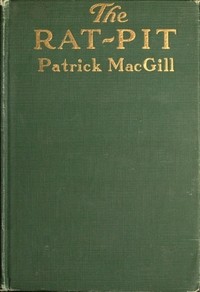
Before opening The Rat-Pit — Inside the Classic, the edition data offers a quick orientation: 96,434 words, 7 hr estimated reading time, and 9 detected text sections.
The text analysis averages about 16.5 words per sentence, while the detected sections provide another way to judge how the source is divided.
Project Gutenberg metadata also associates the work with “Historical fiction,” connecting these edition facts with the source record’s subject description.
Explore this collection
These alternatives are selected using recorded categories and estimated reading time.
About 419 minutes
Historical Psychological Social Fiction
96,362 recorded words. 1 minutes difference from this book's estimate.
View Gutenberg source #50317About 411 minutes
Historical Psychological Social Fiction
94,442 recorded words. 9 minutes difference from this book's estimate.
View Gutenberg source #48882About 432 minutes
Historical Psychological Social Fiction
99,298 recorded words. 12 minutes difference from this book's estimate.
View Gutenberg source #58666Search stored excerpts and compare books → Choose by your preferences →
Choices use stored catalog measurements. Estimates vary with reading speed. A shared category is a catalog label, not a claim that two books have the same argument or literary quality.
Search reads excerpt text stored with this catalog and links to its associated Gutenberg record. The connection is stored in the site database; this tool does not recheck that every excerpt is word-for-word identical to that external record. Excerpt search does not cover every chapter and does not verify historical publication dates.
Catalog snapshot checked: 2026-09-25. Coverage: 97 public books, 97 available source excerpts.
Read the complete public-domain text at its original source.
Read on Project GutenbergPatrick MacGill's The Rat-Pit opens with an author's introduction that frames the novel as a deliberate expose: the titular lodging-house in Glasgow is a place where 'the unfortunate, the sick, and work-weary' share fetid air and cheap drink. MacGill insists the book is 'a transcript from life,' with real people and poignantly true scenes. This claim of documentary fidelity sets the tone for a narrative that refuses to soften its depiction of poverty.
The excerpts reveal a novel built on sharp contrasts. Norah Ryan's story moves between the rural landscapes of Donegal and the cramped, vice-ridden interiors of Glasgow. MacGill's prose lingers on physical details—a broken nose, a disused pigsty used as sleeping quarters—that ground social critique in tangible, often ugly, specifics.
The Rat-Pit is more than a setting; it functions as a concentrated image of the 'Greater Rat-pit' MacGill describes in his introduction. The lodging-house admits any woman—'the unfortunate, the sick, and work-weary'—and its atmosphere of fetid air and heavy stupor mirrors the larger social forces that confine its inhabitants. MacGill explicitly compares this underworld to a 'pest-house,' where the poor are hemmed in by oppression.
This spatial metaphor extends to the novel's structure. The excerpts show characters moving between cramped interiors—boardinghouses, pigsties, gaming tables—where their bodies and choices are constrained. The physical squalor is never gratuitous; it serves as evidence for MacGill's argument that society's decrees create pariahs. Norah's 'great sin' and her subsequent motherhood place her permanently in this rat-pit, a fate the author presents as systemic rather than individual.
A striking passage introduces Alec Morrison, a middle-class bank clerk who fancies himself a Progressive destined to 'show the working classes the road towards a better life.' MacGill undercuts this self-regard with dry irony: 'Most young men of sanguine temperament, who read a little, paint a little, and write a little, have at times hallucinations of this kind.' Morrison's awakening comes when he observes two itinerant workers sleeping in a disused pigsty—the woman's 'bleeding fingers' visible over filthy bags, a guttering candle in a beer bottle.
This scene crystallizes the novel's tension between sympathy and complicity. Morrison is horrified, yet his position as observer replicates the reader's own. MacGill forces a question: does seeing constitute action? The passage's clinical detail—'blunt nails,' 'broken nose'—refuses to aestheticize suffering, insisting on its material reality. The observer's discomfort becomes a moral test.
MacGill renders dialogue with careful attention to regional speech, using dialect not as decoration but as a marker of class and origin. Norah's internal monologue—'The blame's all on me'—mixes Irish cadences with a growing awareness of social judgment. When Maire a Glan and Gourock Ellen laugh at the farmer's son's attention, Norah's whispered self-justification—'Then there's no harm in me speakin' to the farmer's son'—reveals her internalized scrutiny.
The contrast between Norah's voice and Morrison's more polished narration highlights the novel's class dynamics. Morrison's thoughts are rendered in standard English, even when describing squalor; Norah's are inflected with the rhythms of her Donegal upbringing. This linguistic divide underscores the power imbalance between observer and observed, while also granting Norah a distinct interiority that resists reduction to a case study.
Readers should attend to the way MacGill builds his argument through accumulation of detail rather than authorial commentary. The novel's power lies in its refusal to look away from the physical realities of poverty—the broken noses, the filthy straw, the beer-bottle candle. Norah's story is not presented as exceptional but as representative, and the book's structure, moving between rural and urban settings, insists that these conditions are connected. Approach The Rat-Pit as a document of witness, one that trusts its concrete observations to carry its moral weight.
Some evenings, when the rain closes in and the streets feel narrower than they are, I find myself returning to The Rat-Pit—Norah's stubborn, unbroken dignity in that bleak Glasgow lodging-house stays with me long after the last page. Oddly, it stirred a memory of Tom Pinder, Foundling: A Story of the Holmfirth Flood — Reading Companion, quiet weight of a life shaped by forces far larger than any one person.
Capture what you thought, learned, and would like to remember.