About 407 minutes
Whitewash — Themes and Context
Historical Psychological Social Fiction
93,395 recorded words. 4 minutes difference from this book's estimate.
View Gutenberg source #56827
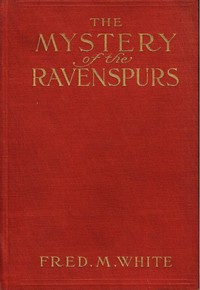
For The Mystery of the Ravenspurs A Romance and Detective Story of Thibet and England — Story, Setting & Ideas, the stored edition analysis reports 94,442 words, 6 hr 51 min estimated reading time, and 10 detected text sections.
The text analysis averages about 11.5 words per sentence, while the detected sections provide another way to judge how the source is divided.
Project Gutenberg metadata also associates the work with “Detective and mystery stories,” connecting these edition facts with the source record’s subject description.
Explore this collection
These alternatives are selected using recorded categories and estimated reading time.
About 407 minutes
Historical Psychological Social Fiction
93,395 recorded words. 4 minutes difference from this book's estimate.
View Gutenberg source #56827About 419 minutes
Historical Psychological Social Fiction
96,362 recorded words. 8 minutes difference from this book's estimate.
View Gutenberg source #50317About 420 minutes
Historical Psychological Social Fiction
96,434 recorded words. 9 minutes difference from this book's estimate.
View Gutenberg source #50895Search stored excerpts and compare books → Choose by your preferences →
Choices use stored catalog measurements. Estimates vary with reading speed. A shared category is a catalog label, not a claim that two books have the same argument or literary quality.
Search reads excerpt text stored with this catalog and links to its associated Gutenberg record. The connection is stored in the site database; this tool does not recheck that every excerpt is word-for-word identical to that external record. Excerpt search does not cover every chapter and does not verify historical publication dates.
Catalog snapshot checked: 2026-09-25. Coverage: 97 public books, 97 available source excerpts.
Read the complete public-domain text at its original source.
Read on Project GutenbergThe novel opens with a stately description of Ravenspur Castle, a 'grand old castle' overlooking the North Sea, its history of 'brave deeds and bloody deeds' established in a single paragraph. This measured, almost antiquarian voice soon gives way to a far more agitated register when the narrative shifts to Tibet. The contrast is stark: the castle's solid granite and drawbridge versus the 'awful eyes' of a face appearing in a dark circle, 'filled with agony and rage and pain.'
White's prose accelerates markedly during the Tibetan sequences, where Tchigorsky's whispered account of Buddhist mysteries and a princess's smile that haunts his dreams creates a breathless, confessional tone. The pace slackens again in the English chapters, where dialogue and deduction take precedence. This rhythmic alternation—between the measured and the frantic—is the book's most distinctive structural feature.
The narrative voice in The Mystery of the Ravenspurs is not uniform. In the opening chapters set at Ravenspur Castle, the prose is formal and slightly archaic: 'Time has dealt lightly with the home of the Ravenspurs. It is probably the most perfect mediæval castle in the country.' Sentences are balanced, clauses are periodic, and the tone is that of a chronicler. When the scene moves to Tibet, however, the language becomes more urgent and colloquial. Tchigorsky's speech is peppered with dashes and exclamations: 'Occult sciences! What do we know of them?' The syntax fragments; the rhythm quickens.
This shift is not merely geographical but psychological. The castle chapters rely on third-person narration with limited interiority, while the Tibetan sections are dominated by first-person testimony—Tchigorsky's and Ralph's—that feels overheard rather than reported. The effect is that the reader experiences the mystery through two distinct modes: the detached observation of the English scenes and the visceral, confessional quality of the Eastern interludes.
White repeatedly uses the motif of disguise and recognition to control pace. In the Tibetan episode, Tchigorsky and Ralph are 'most carefully disguised,' speaking the language 'without flaw,' yet they are recognized by the princess's smile. The moment of recognition is rendered in slow motion: 'I looked up and caught that woman's eye and she smiled.' The sentence is short, isolated, and followed by a long pause in the narrative—a beat that mimics the characters' frozen horror.
Later, the English chapters employ a similar pattern but with different pacing. Geoffrey's investigations involve piecing together clues—a silk thread, white flowers, a woman's double—that are revealed in measured, almost procedural steps. The pace here is deliberate, each chapter adding a small increment of knowledge. The Tibetan sections, by contrast, deliver information in bursts of revelation, often through monologue. This structural contrast means the novel never settles into a single tempo; it oscillates between the patient accumulation of evidence and the sudden, shocking unveiling of secrets.
Certain recurring details act as pace markers. The 'dark Eastern face' with 'awful eyes' that appears on page 110 is a visual motif that recurs in different contexts, each time accelerating the narrative tension. Similarly, the princess's smile—described as something that makes Tchigorsky 'dream of that smile sometimes at night'—is a trigger for rapid, anxious prose. When the smile appears in memory, the sentences become shorter and more fragmented.
In contrast, the castle itself is a locus of slow time. Its 'moat and drawbridge' and 'portcullis might be worked by a child' suggest a setting where change is imperceptible. The narrative slows when describing the castle's physical details, using long, compound sentences that mirror the building's permanence. The bees mentioned in chapter headings ('More of the Bees') may function similarly—a natural, cyclical detail that imposes a steady, almost pastoral rhythm against the plot's more frantic developments. These recurring elements give the reader a way to gauge the story's shifting tempo.
Readers attuned to narrative pace will find that The Mystery of the Ravenspurs rewards attention to its shifts in register. The novel does not sustain a single tone; instead, it moves between the stately and the breathless, the descriptive and the confessional. Observing how White uses setting—the solid English castle versus the volatile Tibetan temple—to modulate his prose can deepen one's engagement with the story. The excerpts suggest a work that is as much about the act of telling as about the mystery itself.
I’ve always cherished White’s knack for slipping the uncanny into quiet corners, much like the sharp-edged tenderness I find in the notes on The Real Charlotte — Reading Notes. The Ravenspurs’ disguised sorrows and Charlotte’s hidden hungers must have been old friends, exchanging knowing glances across my shelves, whispering that every heart keeps a locked door.
Your answers remain private and are stored only in this browser.