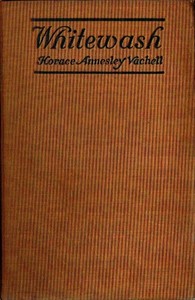
From its first sentence, 'Whitewash' establishes a narrator who reads character through gesture and detail. Lady Selina lays down a quill pen—not a modern one—and smiles, a smile she was 'taught' by a mother with many dowerless daughters. The prose lingers on her husband's portrait: an 'uncompromising chin,' a 'Wellingtonia gigantea nose,' and 'steel-grey eyes.' The narrator even parenthetically remarks 'if physiognomy is to be trusted (which it isn’t),' a wry aside that signals a voice aware of its own conventions. This opening moves at a measured, almost stately pace, matching the world it describes.
A Voice That Comments and Qualifies
The narrator of 'Whitewash' does not simply report; it interprets, often with a dry, knowing tone. When describing Lady Selina's smile, it notes that 'Royalties know the value of such smiles, and so do politicians.' This is not a neutral observation—it places the reader inside a social system where gestures are currency. The narrator also steps back to qualify its own judgments, as with the aside about physiognomy. Later, when Cicely walks to Dr. Pawley's house, the narrative shifts into her consciousness, but still with a detached precision: 'Inevitably the thought rushed to her mind: “All this will be mine some day.”' The free indirect style here is cool, almost clinical, allowing the reader to see Cicely's ambition without endorsing it. This voice, alternating between omniscient commentary and close third-person, creates a layered perspective on the characters' motives.
Pace Shifts Between Stasis and Urgency
The novel's rhythm changes markedly between scenes of domestic ritual and moments of inner crisis. Early passages describing Lady Selina's sitting-room—the red flannel cloaks, the tea packages, the gin 'discreetly covered with a white napkin'—move with a deliberate, almost ceremonial slowness. Each object is named and placed, as if the narrator is taking inventory of a world that values order. But when Cicely contemplates her future, the prose accelerates: 'Out of the present, she flitted into the future. Pious aspirations bore her upward and onward. She floated upon outstretched wings above a reconstructed and regenerated Upworthy.' The sentences become shorter, more breathless, and the imagery takes flight. This contrast between the static, material world of the Manor and the swift, idealizing movements of Cicely's mind creates a tension that drives the narrative forward.
Dialogue as a Marker of Social Distance
Conversations in the excerpts reveal character through what is said—and what is left unsaid. When Lady Selina dismisses Dr. Snitterfield for licking a decanter stopper, the anecdote is both comic and damning, exposing her class assumptions without her seeming to realize it. Cicely, by contrast, 'abandoned both Gridley and Snitterfield' rather than press her point, a silence that speaks to her role as a dutiful daughter. The dialogue is often indirect, filtered through reported speech: 'Lady Selina had prepared an itinerary, so to speak.' This technique keeps the reader at a slight remove, observing the characters' maneuvers rather than being immersed in them. The result is a novel that feels like a series of carefully staged scenes, where every word and gesture carries social weight.
Readers attentive to narrative voice will find in 'Whitewash' a novel that uses pace and perspective to explore the friction between tradition and change. The narrator's wry asides and the shifts between slow description and rapid interior monologue reward close attention. As the story moves from Lady Selina's controlled world to Cicely's aspirations, the prose itself becomes a register of the tensions that define post-war England.
I’ve often thought Lady Selina’s quiet reckonings with duty echo in another old favorite, The Luck of the Vails: A Novel — Reading Companion, where inheritance weighs as gently but as heavily. Both measure the slow drift of private loyalties against public expectation—not loud, just true, like lamp light on a familiar shelf.