About 492 minutes
A Gray Eye or So. In Three Volumes—Volume I, II and III: Complete — Text and Context
Historical Psychological Social Fiction
113,053 recorded words. 9 minutes difference from this book's estimate.
View Gutenberg source #51947
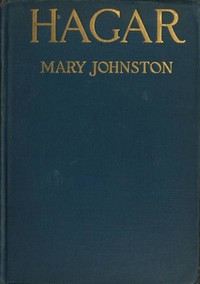
The catalog record for Hagar — Edition Insights provides practical reading context through 110,953 words, 8 hr 3 min estimated reading time, and 11 detected text sections.
The text analysis averages about 14.1 words per sentence, while the detected sections provide another way to judge how the source is divided.
Project Gutenberg metadata also associates the work with “Historical fiction,” connecting these edition facts with the source record’s subject description.
Explore this collection
These alternatives are selected using recorded categories and estimated reading time.
About 492 minutes
Historical Psychological Social Fiction
113,053 recorded words. 9 minutes difference from this book's estimate.
View Gutenberg source #51947About 497 minutes
Historical Psychological Social Fiction
114,107 recorded words. 14 minutes difference from this book's estimate.
View Gutenberg source #57690About 466 minutes
Historical Psychological Social Fiction
107,159 recorded words. 17 minutes difference from this book's estimate.
View Gutenberg source #54683Search stored excerpts and compare books → Choose by your preferences →
Choices use stored catalog measurements. Estimates vary with reading speed. A shared category is a catalog label, not a claim that two books have the same argument or literary quality.
Search reads excerpt text stored with this catalog and links to its associated Gutenberg record. The connection is stored in the site database; this tool does not recheck that every excerpt is word-for-word identical to that external record. Excerpt search does not cover every chapter and does not verify historical publication dates.
Catalog snapshot checked: 2026-09-25. Coverage: 97 public books, 97 available source excerpts.
Read the complete public-domain text at its original source.
Read on Project GutenbergMary Johnston’s Hagar opens on a canal-boat, where a young girl asks her aunt what “evolution” means. The reply—that it is a “very wicked and irreligious Englishman” and his book—immediately establishes the novel’s concern with contested ideas and generational change. The passage is dense with sensory detail: the boat slips “from a stripe of gold into a stripe of shadow,” the towpath mule is “powdered with gold-dust,” and the rope becomes an “arm-thick golden serpent.” This play of light and darkness recurs throughout the excerpts, often marking shifts in mood or setting.
The structure allows Johnston to juxtapose radically different environments: the hushed, hierarchical world of Gilead Balm’s library, where Darwin is forbidden, and the raw, democratic space of the socialist meeting, where a speaker declares that Socialism “will be in the blood and bone and marrow of the world that is to be.” The contrast is sharpened by the physical details of each setting—the camp-stools and canal shadows versus the bare floor and ill-shod feet of the meeting hall.
At the socialist meeting, the speaker’s face is described in terms of illumination: “A colour flared in his cheek,” and his hands “opened and shut.” The audience’s applause is “strange, deep,” and the chairman speaks of a “good experience meeting.” Johnston consistently links inner states—memory, conviction, doubt—to external light or its absence. The man on the platform is “at times boyish,” then “haggard, brooding,” as if the light of the room itself alters his age.
The unnamed man who rises to speak “stammering, with nervous hesitation” contrasts with the practiced orators. His clothes are “poor, but whole and clean,” and his physical description—short dark beard, deep-set eyes—is given in fragments, as if Hagar is piecing him together from memory. The novel’s interest in how people speak, and what their speech reveals about their place in the world, is evident even in these brief exchanges.
Readers should note that the socialist meeting scene, while vivid, is only one stop in a long itinerary. The novel’s structure—episodic, scene-driven, with little connective narration—means that each chapter demands close attention to setting and dialogue. Johnston does not provide easy summaries; meaning accumulates through juxtaposition. The light-and-shadow motif may offer a key: watch for moments when the narrative itself shifts from gold to shadow, and back again.
Johnston’s Hagar rewards a reader willing to move slowly through its discrete scenes, attending to the physical world as much as to argument. The canal-boat, the streetcar, the meeting hall—each is a stage for a different kind of performance. The novel’s structure, with its repeated returns to “Gilead Balm,” invites speculation about what home means to a woman who keeps leaving it. But the excerpts offer no final answer, only the ongoing play of light and shadow.
That lingering feeling—how a story can hold both a porch’s shadow and a city’s bright striving—stayed with me long after Hagar. I found something similar in With Force and Arms: A Tale of Love and Salem Witchcraft — Edition Insights, where light and fear move through small rooms and open streets alike. It left me quiet, thinking.
Answer a few questions and save a private reflection on this device.