About 586 minutes
Rodmoor: A Romance — Background and Themes
Historical Psychological Social Fiction
134,648 recorded words. 8 minutes difference from this book's estimate.
View Gutenberg source #53339
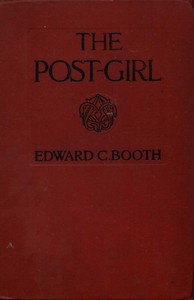
The source record for The post-girl — Story, Setting & Ideas measures this digital text at 132,778 words, 9 hr 38 min estimated reading time, and 17 detected text sections.
The text analysis averages about 16.9 words per sentence, while the detected sections provide another way to judge how the source is divided.
Project Gutenberg metadata also associates the work with “Love stories,” connecting these edition facts with the source record’s subject description.
Explore this collection
These alternatives are selected using recorded categories and estimated reading time.
About 586 minutes
Historical Psychological Social Fiction
134,648 recorded words. 8 minutes difference from this book's estimate.
View Gutenberg source #53339About 615 minutes
Historical Psychological Social Fiction
141,341 recorded words. 37 minutes difference from this book's estimate.
View Gutenberg source #59960About 535 minutes
Historical Psychological Social Fiction
122,933 recorded words. 43 minutes difference from this book's estimate.
View Gutenberg source #54404Search stored excerpts and compare books → Choose by your preferences →
Choices use stored catalog measurements. Estimates vary with reading speed. A shared category is a catalog label, not a claim that two books have the same argument or literary quality.
Search reads excerpt text stored with this catalog and links to its associated Gutenberg record. The connection is stored in the site database; this tool does not recheck that every excerpt is word-for-word identical to that external record. Excerpt search does not cover every chapter and does not verify historical publication dates.
Catalog snapshot checked: 2026-09-25. Coverage: 97 public books, 97 available source excerpts.
Read the complete public-domain text at its original source.
Read on Project GutenbergThe novel opens with a wry, communal voice that catalogues Ullbrig's seasonal rhythms and its inhabitants' skeptical view of outsiders—'spawers' who pay town price for country butter. The narrator, a local observer, sets the scene with dry humor and a chemist's precision, measuring out dialect phrases like prescriptions. This is not a sentimental pastoral but a sharply observed social ecosystem where a pig in the garden and a formulaic road-direction define the village's character.
Into this closed world steps a 'Spawer' whose teasing, elaborate speech contrasts with the clipped Yorkshire cadences. His banter with the post-girl—whom he nicknames 'little Israelite' and 'Rebecca'—reveals a power play of wit and withheld emotion. The excerpts show a writer attentive to the weight of every word, especially when silence or a tremor in the arm speaks louder than dialogue.
The narrator renders Ullbrig speech with careful phonetic spelling—'rawds,' 'tiv it,' 'coom back'—but never reduces it to caricature. When Ginger announces 'spawers i' 'oose,' the narrator admits his own initial incomprehension, creating a subtle joke at the expense of urban readers. Yet the dialect is also a marker of belonging: those who speak it are 'us,' while visitors are migratory birds leaving only 'mustard-stained sandwich-paper.' The post-girl's own speech, though less phonetically marked in the excerpts, is measured and apprehensive, contrasting with the Spawer's voluble, literary flourishes. This linguistic tension underscores the central conflict between rooted community and transient individual.
The Spawer's dialogue is a performance of evasion and flirtation. He frames his impending departure as a 'condemned man, under indefinite reprieve,' and treats the post-girl's sympathy as a commodity to be haggled over: 'She wants good security for any small advances of commiseration.' His biblical nicknames—Rachel, Leah, Rebecca—impose a script on her, while his self-deprecation ('frightful ass') disarms criticism. Yet the narrator notes a tremor in the girl's arm that may be her own or a projection of his sympathy. The Spawer controls the pace, but the excerpts leave his true intentions opaque: is he confessing love, or merely enjoying the game? The reader, like the post-girl, is left guessing.
In the moonlight scene, the post-girl's responses are reduced to fragments—'I thought...' and 'Are you really... going?'—while the Spawer fills the silence with elaborate metaphors. The narrator repeatedly questions his own perceptions: 'Did a tremor... run up the arm... or was it his own mind?' This uncertainty is structural: the novel withholds the girl's interiority, filtering her through the narrator's limited perspective. The Spawer's secret—'a very silly thing'—is dangled but not revealed. The excerpts thus establish a pattern of deferred revelation, where meaning lies not in what is said but in the pauses, the half-finished sentences, and the characters' mutual misreadings.
Readers should attend to the spaces between words: the post-girl's silences, the narrator's self-corrections, and the Spawer's rhetorical feints. Booth uses dialect not as local color but as a lens on power and intimacy. The novel rewards patience with its slow accumulation of detail—a footmark on a doorstep, a formula for directions—that builds a world where every gesture carries the weight of unspoken history.
That rainy afternoon, I kept returning to the post-girl’s wary exchanges, the way her precise Yorkshire dialect held back more than it revealed. Her quiet suspicion of the stranger’s charm lingered after I closed the book. Idly, I reached for something else on the shelf, and found The Living Mummy — A Reader’s Guide, which unwound a similar thread about buried secrets surfacing in close communities.
Answer a few questions and save a private reflection on this device.