About 641 minutes
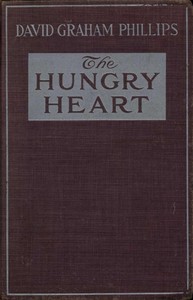
The Hungry Heart: A Novel — Reading Companion
Historical Psychological Social Fiction
147,249 recorded words. 26 minutes difference from this book's estimate.
View Gutenberg source #48699
The source record for The Middle of the Road: A Novel — Text and Context measures this digital text at 141,341 words, 10 hr 15 min estimated reading time, and 17 detected text sections.
The text analysis averages about 14.0 words per sentence, while the detected sections provide another way to judge how the source is divided.
Project Gutenberg metadata also associates the work with “Man-woman relationships -- Fiction,” connecting these edition facts with the source record’s subject description.
Explore this collection
These alternatives are selected using recorded categories and estimated reading time.
About 641 minutes
Historical Psychological Social Fiction
147,249 recorded words. 26 minutes difference from this book's estimate.
View Gutenberg source #48699About 586 minutes
Historical Psychological Social Fiction
134,648 recorded words. 29 minutes difference from this book's estimate.
View Gutenberg source #53339About 578 minutes
Historical Psychological Social Fiction
132,778 recorded words. 37 minutes difference from this book's estimate.
View Gutenberg source #49856Search stored excerpts and compare books → Choose by your preferences →
Choices use stored catalog measurements. Estimates vary with reading speed. A shared category is a catalog label, not a claim that two books have the same argument or literary quality.
Search reads excerpt text stored with this catalog and links to its associated Gutenberg record. The connection is stored in the site database; this tool does not recheck that every excerpt is word-for-word identical to that external record. Excerpt search does not cover every chapter and does not verify historical publication dates.
Catalog snapshot checked: 2026-09-25. Coverage: 97 public books, 97 available source excerpts.
Read the complete public-domain text at its original source.
Read on Project GutenbergPhilip Gibbs opens The Middle of the Road with a sustained interior monologue that immediately establishes a claustrophobic domestic setting. Bertram Pollard paces his twelve-by-fourteen-foot study, listening to a grandfather clock and his own breathing, while his wife Joyce labors upstairs. The prose mimics his nerve-tattered state through short, repetitive phrases and a litany of physical actions—praying, cursing, pacing, gripping the mantelpiece. Gibbs renders Bertram’s psychological fragmentation by juxtaposing the family maxim “Keep a stiff upper lip” against his present helplessness, a contrast that signals the novel’s interest in the collapse of pre-war codes of stoicism.
The opening chapter’s narrative voice is restless and self-interrogating. Bertram’s thoughts circle obsessively: he measures his room, recalls his father’s admonition, and berates himself for cowardice. Gibbs shifts between past and present tense without warning, mirroring a mind unable to settle. The prose is dense with dashes and ellipses, as if Bertram is speaking to himself in fragments. This technique persists in later excerpts, where his internal debates over whether to write a “raging letter” or a conciliatory one are rendered as a back-and-forth between impulse and restraint. The voice is not omniscient but tightly focalized through Bertram, making the reader party to his self-doubt and his habit of replaying conversations with Joyce in his head.
Letters become a structural device that exposes the couple’s emotional geography. Joyce’s letter from Paris is quoted directly, its casual tone—mentioning Kenneth Murless, calling her separation a “rest-cure”—contrasting sharply with Bertram’s agitated reading of it. Gibbs reproduces the letter’s underlinings and signature (“Yours affectionately”), then shows Bertram’s reaction: he laughs “not with any merriment of soul.” The novel then presents two drafts of his reply—first a furious accusation, then a restrained plea—before settling on a third version that is neither. This layered presentation of correspondence slows the narrative pace, forcing the reader to weigh each word as Bertram does. The letters are not mere plot devices but psychological documents, revealing how distance distorts intimacy.
Gibbs uses repetition to signal Bertram’s mounting distress. In the opening, the phrase “Keep a stiff upper lip, my lad!” recurs like a failed mantra. Later, the word “Lord!” is repeated three times in a single line. In the correspondence section, the phrase “not good enough” appears twice in quick succession, first as Bertram’s judgment of Joyce’s offer, then as a self-directed verdict on his own stubbornness. This verbal echoing creates a rhythmic pattern that mimics obsessive thought. The novel’s pacing accelerates and decelerates accordingly: long, looping sentences during Bertram’s brooding give way to staccato bursts when he confronts a decision. The effect is a prose that feels breathless, as if the narrator is himself caught in the middle of the road, unable to move forward or back.
Readers attentive to shifts in tempo will find that Gibbs’s prose rewards close attention to its cadences. The novel’s psychological realism depends less on plot than on the ebb and flow of Bertram’s inner life. Notice how the density of description thins during letter-reading scenes and thickens during moments of paralysis. The narrative voice is not stable; it is a barometer of the protagonist’s composure. Treat the text as a study in how language bends under emotional pressure.
Reading about Bertram Pollard’s quiet unraveling after the war, I kept thinking how some books don’t leave—they just settle into your bones. That restlessness, the way he talks to himself more than his wife, reminded me of the softer ache in The Land of Content — Edition Insights. It lingers differently, but it lingers. Like an old letter you find folded in a coat pocket.
Capture what you thought, learned, and would like to remember.