About 334 minutes
A Reaping — Context and Discussion
Historical Psychological Social Fiction
76,740 recorded words. 0 minutes difference from this book's estimate.
View Gutenberg source #58202
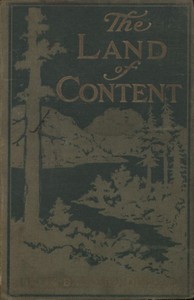
Before opening The Land of Content — Edition Insights, the edition data offers a quick orientation: 76,617 words, 5 hr 34 min estimated reading time, and 7 detected text sections.
The text analysis averages about 17.0 words per sentence, while the detected sections provide another way to judge how the source is divided.
Project Gutenberg metadata also associates the work with “Physicians -- Fiction,” connecting these edition facts with the source record’s subject description.
Explore this collection
These alternatives are selected using recorded categories and estimated reading time.
About 334 minutes
Historical Psychological Social Fiction
76,740 recorded words. 0 minutes difference from this book's estimate.
View Gutenberg source #58202About 335 minutes
Historical Psychological Social Fiction
76,932 recorded words. 1 minutes difference from this book's estimate.
View Gutenberg source #56970About 335 minutes
Historical Psychological Social Fiction
76,984 recorded words. 1 minutes difference from this book's estimate.
View Gutenberg source #59893Search stored excerpts and compare books → Choose by your preferences →
Choices use stored catalog measurements. Estimates vary with reading speed. A shared category is a catalog label, not a claim that two books have the same argument or literary quality.
Search reads excerpt text stored with this catalog and links to its associated Gutenberg record. The connection is stored in the site database; this tool does not recheck that every excerpt is word-for-word identical to that external record. Excerpt search does not cover every chapter and does not verify historical publication dates.
Catalog snapshot checked: 2026-09-25. Coverage: 97 public books, 97 available source excerpts.
Read the complete public-domain text at its original source.
Read on Project GutenbergThe novel opens not with its heroine but with a doctor asleep in his buggy, his horse stopping for a patch of grass at a mountain crossroads. The prose lingers on the landscape—the ridge-road and turnpike, the memory of an army's retreat—before revealing that John Ogilvie has spent fifty hours with a sick baby. This unhurried, sensory beginning establishes a world where human exhaustion and animal instinct share equal weight, and where the past (the Civil War) lies just beneath the present calm.
The first excerpt introduces John Ogilvie through his physical state: he “almost stumbled out of the cabin and into his buggy, to fall asleep before he could do more than say, ‘Home, old lady!’” His horse, White Rosy, is described as “an animal of experience and judgment,” capable of taking him home unguided. This early focus on bodily weariness and animal competence sets a tone of practical, unsentimental observation. The narrator’s eye moves from the doctor’s fatigue to the horse’s appetite, then to the historical weight of the turnpike—a road that once carried an army “in pride and hope and eagerness, to drift southward again … with only pride left.” The juxtaposition of a tired man’s nap with a region’s traumatic memory suggests that personal and historical dramas will intertwine.
By the twelfth chapter, the narrative shifts to Rosamund, who is preparing to move into a cottage for the winter. The excerpts show her grappling with tasks she had never considered: cleaning the house, finding help, facing the mountaineers’ distrust. The prose notes that “she had never given a thought to the machinery of life; it had seemed as simple as to breathe the free air.” Now she is “ashamed to find how inadequate she was for such elemental things.” The resistance she meets—from Pa Cary, the doctor, even Mother Cary—centers on safety: “Pap says … some are sayin’ you know too much about the doin’s o’ this part of the country.” Rosamund’s determination to prove her sincerity is undercut by the community’s suspicion, a tension that the excerpts leave unresolved.
Throughout the excerpts, the setting is rendered with a specificity that makes it feel like a participant. The opening describes the ridge-road as “only one of the little mountain by-ways that wind through woods and up and down dale as the necessities of the mountain people wear them.” Later, Rosamund and Yetta walk on “strange, dimly marked paths through the woods, paths as vague and deserted as if trodden only by timid wild feet.” The land is not a backdrop but a force that shapes movement, labor, and social relations. The mountaineers appear “more frequently” only after the summer people leave, and their “half-frightened eyes” and “slat bonnets” suggest a guardedness that the novel’s title, The Land of Content, may ironically counterpoint.
The excerpts provide no resolution to the central conflicts: whether Rosamund will win the community’s trust, what the “disquieting information” is that Ogilvie learns, or how the romantic thread (hinted at by “the secret flaming of her cheeks”) develops. The frontispiece quotation—“‘To-morrow,’ he replied, ‘and all the to-morrows!’”—suggests a forward-looking or perhaps fatalistic tone, but its context is unknown. Readers should note that the novel’s 76,000 words likely contain many turns not foreshadowed here. The early emphasis on the doctor’s perspective and the later focus on Rosamund’s domestic trials may shift again; the excerpts do not reveal whether the narrative remains split or converges.
Pay attention to how Delano uses the physical world—roads, seasons, houses—to mirror inner states. The opening’s “timid roadside flowers” and “belated snowfalls” give way to Rosamund’s “aching fatigue of body,” suggesting a continuity between landscape and character. Also note the recurring motif of knowledge: the mountaineers fear Rosamund knows too much; she hopes to “enlighten them.” The novel may test whether understanding can bridge the gap between outsider and community. Finally, the horse White Rosy, who appears only in the first excerpt, may be a touchstone for the kind of instinctive, unspoken wisdom the story values.
These excerpts from the opening and middle of The Land of Content reveal a novel attentive to physical detail, social friction, and the weight of place. The first-time reader may find it useful to track how the doctor’s initial exhaustion and Rosamund’s later struggles echo each other, and how the mountain setting resists being merely picturesque. The story’s full arc—whether it leads to contentment or conflict—remains to be discovered.
There’s something tender in that weary doctor’s homecoming, the way Rosamund’s small domestic battles echo the mountain’s quiet distrust. It reminds me of another old story, The Wild Irish Girl: A National Tale — Key Ideas to Explore, where belonging feels just as fragile and foreign. I find myself thinking of both long after closing the pages, their aches lingering like a familiar evening shadow.
A brief reflection can help important ideas stay with you longer.