About 465 minutes
A Servant of the Public — Inside the Classic
Historical Psychological Social Fiction
106,727 recorded words. 1 minutes difference from this book's estimate.
View Gutenberg source #48642
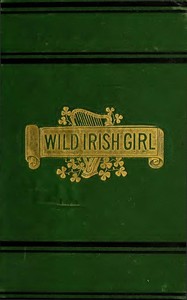
The source record for The Wild Irish Girl: A National Tale — Key Ideas to Explore measures this digital text at 107,159 words, 7 hr 46 min estimated reading time, and 13 detected text sections.
The text analysis averages about 32.5 words per sentence, while the detected sections provide another way to judge how the source is divided.
Project Gutenberg metadata also associates the work with “Love stories,” connecting these edition facts with the source record’s subject description.
Explore this collection
These alternatives are selected using recorded categories and estimated reading time.
About 465 minutes
Historical Psychological Social Fiction
106,727 recorded words. 1 minutes difference from this book's estimate.
View Gutenberg source #48642About 457 minutes
Historical Psychological Social Fiction
105,006 recorded words. 9 minutes difference from this book's estimate.
View Gutenberg source #57867About 483 minutes
Historical Psychological Social Fiction
110,953 recorded words. 17 minutes difference from this book's estimate.
View Gutenberg source #49772Search stored excerpts and compare books → Choose by your preferences →
Choices use stored catalog measurements. Estimates vary with reading speed. A shared category is a catalog label, not a claim that two books have the same argument or literary quality.
Search reads excerpt text stored with this catalog and links to its associated Gutenberg record. The connection is stored in the site database; this tool does not recheck that every excerpt is word-for-word identical to that external record. Excerpt search does not cover every chapter and does not verify historical publication dates.
Catalog snapshot checked: 2026-09-25. Coverage: 97 public books, 97 available source excerpts.
Read the complete public-domain text at its original source.
Read on Project GutenbergThe Wild Irish Girl opens not with a scene in Ireland but with an epistolary lament from an English earl to his imprisoned son, Horatio. The father's voice is ornate and emotionally charged, dwelling on the son's 'romantic eccentricity' and 'exotic vices'—a vocabulary that immediately signals the novel's investment in sentimental moral psychology. This framing device, however, quickly gives way to a very different register when the narrative reaches Ireland: concrete descriptions of a 'mass-house of the same order of architecture as the generality of Irish cabins' and a crowd 'prostrated on the earth, praying over their beads.' The contrast between the earl's abstract grief and the tactile details of Irish devotional life is the novel's first structural tension.
The excerpts are drawn entirely from letters, a form that allows Morgan to layer multiple perspectives. The earl's opening letter is a set piece of parental anguish, full of balanced clauses and rhetorical questions: 'whether in the scale of human feelings, triumphant pride or affectionate regret preponderate.' This style is deliberately literary, even theatrical. Later, Horatio's own letters adopt a more colloquial, self-mocking tone—'I frequently think I have been bit by a torpedo'—while still maintaining the period's taste for classical allusion (the 'ass of Balaam'). The epistolary mode thus becomes a vehicle for character differentiation: the father speaks in the language of sensibility, the son in a blend of wit and introspection. Yet both share a tendency to frame experience through literary and historical references, a habit that the novel may be inviting readers to question.
Horatio's arrival in Ireland is marked by a series of observations that resist easy exoticism. The mass-house is described with architectural specificity—'a stone cross, roughly hewn, over its entrance'—and the congregation's behavior is noted without overt judgment. The sermon is delivered 'partly in Irish, partly in English,' a detail that foregrounds linguistic hybridity. The narrator's mare, named 'rosinante' after Don Quixote's horse, suggests a self-aware, even ironic stance toward his own role as a traveler. These passages do not simply depict Ireland as picturesque; they register the narrator's discomfort and fascination. The catalog subject 'Celts' is here given texture through the depiction of a living community, not a stereotype. The excerpts offer no resolution to this encounter, leaving the reader to observe the process of cultural translation as it unfolds.
The figure of Glorvina, the 'wild Irish girl' of the title, appears in the excerpts primarily through Horatio's anxious reflections. He wonders whether she feels his absence, whether he is 'missed, and missed with regret.' The only direct anecdote involves her weeping over a pet robin—a moment of sentimental pathos that aligns her with the novel's broader interest in feeling. Yet she remains largely offstage, a subject of speculation rather than direct representation. This narrative strategy creates a tension between the catalog subject 'Princesses' and the actual textual evidence: Glorvina is more a catalyst for the hero's emotional development than a fully realized character in the excerpts. Readers should attend to how Morgan balances the promised romance with the political and ethnographic interests that dominate the letters.
Readers approaching The Wild Irish Girl should be prepared for a novel that moves between sentimental introspection and ethnographic reportage. The epistolary structure rewards attention to shifts in tone and audience: letters are performances as much as confessions. The excerpts suggest that Morgan is as interested in the psychology of the English observer as in the Irish world he describes. Treat the catalog subjects as starting points, not summaries; the novel's interest in 'love' and 'princesses' is mediated by a persistent curiosity about language, religion, and social hierarchy.
The rain settled on the window, and I lingered in Lady Morgan’s Ireland, her lovely Glorvina speaking so warmly of place and belonging. That same ache for home drifted me afterwards to a sturdier tale of lads and roads. I found myself turning pages of Kidnapped (Illustrated) Being Memoirs of the Adventures of David Balfour in the Year 1751 — Story, Setting & Ideas, and it felt like stepping from one rainy heath into another.
Save your reaction, strongest insight, and memorable passage.