About 465 minutes
A Servant of the Public — Inside the Classic
Historical Psychological Social Fiction
106,727 recorded words. 8 minutes difference from this book's estimate.
View Gutenberg source #48642
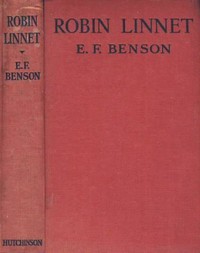
Before opening Robin Linnet — A Closer Reading, the edition data offers a quick orientation: 105,006 words, 7 hr 37 min estimated reading time, and 10 detected text sections.
The text analysis averages about 18.2 words per sentence, while the detected sections provide another way to judge how the source is divided.
Project Gutenberg metadata also associates the work with “World War, 1914-1918 -- Fiction,” connecting these edition facts with the source record’s subject description.
Explore this collection
These alternatives are selected using recorded categories and estimated reading time.
About 465 minutes
Historical Psychological Social Fiction
106,727 recorded words. 8 minutes difference from this book's estimate.
View Gutenberg source #48642About 466 minutes
Historical Psychological Social Fiction
107,159 recorded words. 9 minutes difference from this book's estimate.
View Gutenberg source #54683About 447 minutes
Historical Psychological Social Fiction
102,792 recorded words. 10 minutes difference from this book's estimate.
View Gutenberg source #56976Search stored excerpts and compare books → Choose by your preferences →
Choices use stored catalog measurements. Estimates vary with reading speed. A shared category is a catalog label, not a claim that two books have the same argument or literary quality.
Search reads excerpt text stored with this catalog and links to its associated Gutenberg record. The connection is stored in the site database; this tool does not recheck that every excerpt is word-for-word identical to that external record. Excerpt search does not cover every chapter and does not verify historical publication dates.
Catalog snapshot checked: 2026-09-25. Coverage: 97 public books, 97 available source excerpts.
Read the complete public-domain text at its original source.
Read on Project GutenbergThe novel opens with two Cambridge undergraduates, Damon and Pythias (nicknamed Day and Pie), studying Plato's Apology by a guttering candle, relying on a crib more than the Greek lexicon. Their banter—about whisky, Socrates, and the unreliable electric light—establishes a tone of collegiate irony and intellectual play. Benson immediately signals that this is a world where classical learning is a social performance, not a solemn pursuit.
The opening chapter immerses the reader in the rituals of Edwardian Cambridge: stolen candles, shared cribs, and the casual ordering of whisky on a friend's account. Damon and Pythias speak in a code of understatement and mock-formality—"I drink it not for drinky but for drunky"—that reveals their class and education. Benson uses their dialogue to sketch character without exposition: Damon is the more assertive, Pythias the more passive. The scene also introduces a recurring motif: the gap between ideal and reality. Socrates' dignified death contrasts with the students' flippant translation, and the electric light that "got tired and went to sleep" hints at a world where modern comforts fail.
Later excerpts shift to Helen Grote, a woman receiving a brutal letter from a German diplomat named Friedrich Kuhlmann. The letter accuses her of being "facile" and claims to speak as "one of England's bitterest foes." Benson here moves from academic comedy to psychological drama. Helen's reaction is complex: she feels not humiliation but "a perverse thrill of excitement" that he feels strongly about her. The narrative enters her consciousness, describing her trembling hand and the "local anaesthetic" that separates her mind from her body. This passage suggests that the novel will explore not only social surfaces but also the hidden, often contradictory, inner lives of its characters, especially under the pressure of war.
Benson builds his world through precise, sensory details. The opening room is defined by a single guttering candle, a stolen source of light that forces the two students to huddle together. Later, Helen Grote rides through "gas-lit streets" and observes the "Saturday night crowd" and "solitary, be-feathered women" at street corners. These details do more than set a scene; they create a social geography. The contrast between the enclosed, candlelit college room and the public, gaslit streets mirrors the novel's movement between private and public selves. Benson also uses physical objects—the letter, the speaking trumpet, the glove slipped from a hand—as focal points for emotion.
The excerpts suggest a novel that alternates between male and female perspectives, between Cambridge and London, and between comedy and psychological intensity. The first chapter's leisurely, ironic tone gives way to a more urgent, interior style in Helen's section. A first-time reader should note how Benson uses dialogue to reveal character in the opening, then shifts to free indirect discourse to access Helen's thoughts. The war enters obliquely—through a German diplomat's letter—rather than through battle scenes. This suggests that the novel's interest lies in the war's effect on personal relationships and self-perception. The reader should watch for how these early tonal shifts prepare for later developments.
As you read, pay attention to the way Benson uses objects—a candle, a letter, a glove—to condense emotional states. The novel's title character, Robin Linnet, has not yet appeared in these excerpts, so the opening chapters may be establishing a social world into which he will step. The contrast between the undergraduates' studied nonchalance and Helen's raw interiority suggests that Benson is interested in the performance of self and the moments when that performance breaks down.
Reading Robin Linnet again, I kept thinking how quietly Benson tracks the weight of unspoken choices—the way a young man’s moral shape emerges not from grand gestures, but from small hesitations. It reminded me of the careful tone in The Wheels of Time — Background and Themes, where similar undercurrents of duty and longing drift beneath the surface, almost like light through a curtain. Odd, how two books can share a hush.
Capture what you thought, learned, and would like to remember.