About 373 minutes
The Land of Joy — Background and Themes
Historical Psychological Social Fiction
85,708 recorded words. 3 minutes difference from this book's estimate.
View Gutenberg source #57497
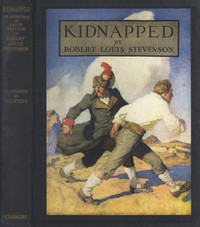
The source record for Kidnapped (Illustrated) Being Memoirs of the Adventures of David Balfour in the Year 1751 — Story, Setting & Ideas measures this digital text at 86,321 words, 6 hr 16 min estimated reading time, and 10 detected text sections.
The text analysis averages about 21.5 words per sentence, while the detected sections provide another way to judge how the source is divided.
Project Gutenberg metadata also associates the work with “Historical fiction,” connecting these edition facts with the source record’s subject description.
Explore this collection
These alternatives are selected using recorded categories and estimated reading time.
About 373 minutes
Historical Psychological Social Fiction
85,708 recorded words. 3 minutes difference from this book's estimate.
View Gutenberg source #57497About 383 minutes
Historical Psychological Social Fiction
87,914 recorded words. 7 minutes difference from this book's estimate.
View Gutenberg source #52715About 383 minutes
Historical Psychological Social Fiction
87,894 recorded words. 7 minutes difference from this book's estimate.
View Gutenberg source #54371Search stored excerpts and compare books → Choose by your preferences →
Choices use stored catalog measurements. Estimates vary with reading speed. A shared category is a catalog label, not a claim that two books have the same argument or literary quality.
Search reads excerpt text stored with this catalog and links to its associated Gutenberg record. The connection is stored in the site database; this tool does not recheck that every excerpt is word-for-word identical to that external record. Excerpt search does not cover every chapter and does not verify historical publication dates.
Catalog snapshot checked: 2026-09-25. Coverage: 97 public books, 97 available source excerpts.
Read the complete public-domain text at its original source.
Read on Project GutenbergStevenson’s dedication to Charles Baxter is unusually candid about the book’s liberties: he admits the Appin murder is misdated to 1751, the Torran rocks misplaced, and the printed trial silent on David Balfour. He calls the book “no furniture for the scholar’s library” but a means to “steal some young gentleman’s attention from his Ovid.” This framing sets up a tension between historical fact and narrative license that runs through the entire text.
The excerpt from Chapter 18 shows David, alone in the Highlands, stopping a party of travellers. The leader is Colin Roy Campbell of Glenure—the Red Fox—and the encounter crackles with suspicion. David’s bold claim to be “an honest subject of King George” is immediately undercut by the shot that kills Glenure. The scene is a microcosm of the novel’s method: a chance meeting, a flash of violence, and a young man caught in events beyond his control.
The dedication is not a mere courtesy; it is a statement of method. Stevenson directly addresses the question of accuracy, calling the book’s historical liberties “nuts beyond my ability to crack.” He then pivots to defend Alan Breck’s innocence, citing a living tradition in Appin. This is a remarkable move: the author admits his story is not strictly factual, yet insists on a deeper truth about character and reputation.
The dedication also reveals the intended audience. Stevenson writes for a schoolroom, for a boy who might be “pleased to find his father’s name on the fly-leaf.” The tone is intimate, almost conspiratorial. He mentions the Speculative Society and names like Scott and Robert Emmet, grounding the book in a specific literary and social world. This is not a universal adventure but one tied to a particular time, place, and set of loyalties.
For the reader, the dedication serves as a warning and an invitation. It says: expect invention, but trust the moral core. The novel will play with dates and geography, but it will be true to the spirit of its characters and the Highland code of secrecy.
The meeting with Colin Roy Campbell is the novel’s pivotal scene, and Stevenson builds it with careful detail. The travellers come “single and led their horses by the reins” because the road is rough. David notices the tartan on the servant’s clothes and knows it is illegal—a sign that the master is either an outlaw or in “singular good odour with the Government.” This observation shows David’s growing awareness of the political landscape.
The dialogue is taut with double meanings. Glenure calls David’s appearance “more of a warning than two pyats” (magpies). The lawyer, Mungo, replies, “this is an ill subject for jesting.” When David says he seeks “the man that lives there,” Glenure muses, “James of the Glens,” and asks the lawyer, “Is he gathering his people, think ye?” The conversation is a dance of suspicion, with each party testing the other.
The murder itself is abrupt: “there came the shot of a firelock from higher up the hill; and with the very sound of it Glenure fell upon the road.” David’s reaction is not described; the focus stays on the dying man’s words: “Take care of yourselves. I am dead.” The scene ends with the wounded man trying to open his clothes, his fingers slipping. Stevenson leaves the aftermath to the reader’s imagination, a technique that heightens the sense of chaos.
David’s narration is a blend of youthful confidence and creeping doubt. In the excerpt, he admits to “doubts” about what Mr. Campbell or Mr. Henderland would think of his “folly and presumption.” Yet when he meets the travellers, he speaks boldly: “I am neither of his people nor yours, but an honest subject of King George, owing no man and fearing no man.” This contradiction—inner uncertainty paired with outward defiance—defines his character.
Stevenson uses David’s limited perspective to create dramatic irony. David does not recognize the tartan as Campbell colors, though the reader may infer it. He does not understand the full import of Glenure’s questions. His claim to be “an honest subject” is politically naive in a region where loyalty is fluid and dangerous. The novel’s tension comes from watching David learn the rules of a world he does not yet comprehend.
David’s voice is also marked by a formal, slightly archaic quality. He uses phrases like “I had no sooner seen these people coming than I made up my mind (for no reason that I can tell) to go through with my adventure.” The parenthetical admission of irrationality is typical of his self-awareness. He is not a swashbuckling hero but a thoughtful, sometimes hesitant young man, which makes his journey all the more compelling.
Readers should pay close attention to the dedication’s hints about Alan Breck’s guilt or innocence—Stevenson himself seems to invite debate. The novel’s historical setting is deliberately flexible, so treat dates and locations as narrative choices rather than errors. David’s first-person account is the only lens we have; notice what he observes and what he misses. The illustrations by N. C. Wyeth, though not excerpted here, are integral to this edition and likely emphasize key dramatic moments.
I think of Kidnapped as a bonfire on a raw night—brave, but with shadows. Its boy stumbles through blood and mist, learning that courage is often just politeness under duress. Years later, I found An Act in a Backwater — Reading Notes, and it felt like the quiet hush after that fire dies. Both whisper different things about how we survive the dark.
Use these questions to collect your thoughts before moving on.