About 226 minutes
A Barren Title: A Novel — Reading Companion
Historical Psychological Social Fiction
51,820 recorded words. 6 minutes difference from this book's estimate.
View Gutenberg source #57613
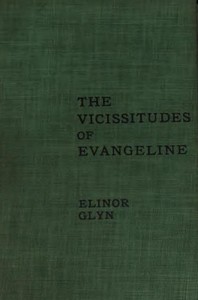
The source record for The Vicissitudes of Evangeline — Edition Insights measures this digital text at 53,306 words, 3 hr 52 min estimated reading time, and 7 detected text sections.
The text analysis averages about 15.7 words per sentence, while the detected sections provide another way to judge how the source is divided.
Project Gutenberg metadata also associates the work with “Young women -- Fiction,” connecting these edition facts with the source record’s subject description.
Explore this collection
These alternatives are selected using recorded categories and estimated reading time.
About 226 minutes
Historical Psychological Social Fiction
51,820 recorded words. 6 minutes difference from this book's estimate.
View Gutenberg source #57613About 222 minutes
Historical Psychological Social Fiction
51,054 recorded words. 10 minutes difference from this book's estimate.
View Gutenberg source #54033About 222 minutes
Historical Psychological Social Fiction
50,888 recorded words. 10 minutes difference from this book's estimate.
View Gutenberg source #60099Search stored excerpts and compare books → Choose by your preferences →
Choices use stored catalog measurements. Estimates vary with reading speed. A shared category is a catalog label, not a claim that two books have the same argument or literary quality.
Search reads excerpt text stored with this catalog and links to its associated Gutenberg record. The connection is stored in the site database; this tool does not recheck that every excerpt is word-for-word identical to that external record. Excerpt search does not cover every chapter and does not verify historical publication dates.
Catalog snapshot checked: 2026-09-25. Coverage: 97 public books, 97 available source excerpts.
Read the complete public-domain text at its original source.
Read on Project GutenbergThe novel opens with Evangeline's journal entry, dated November 3rd, 1904, at Branches Park. She declares her intention to become an adventuress, having read about the role in a book: 'being nice-looking and having nothing to live on, and getting a pleasant time out of life.' With £300 a year and a clear-eyed view of her late guardian's cruelty, she sets a tone of defiant self-awareness. The diary form allows direct access to her thoughts, and the narrative moves briskly between country-house scenes and London encounters, often through abrupt shifts in setting that mirror her restless circumstances.
The journal format gives Evangeline an immediate, unguarded voice. She writes with a blend of candor and theatricality, as when she notes, 'I detested Mrs. Carruthers most of the time.' Her self-description as 'extremely pretty' and her awareness of how to 'do my hair, and put on my hats' reveal a character who performs femininity strategically. The diary entries are punctuated by dashes and exclamations, creating a breathless rhythm that mimics spoken thought. This structure allows the reader to trace her evolving attitudes without an external narrator's filter.
Evangeline is repeatedly called a 'witch'—by Lady Verningham and later by her suitor, who says she 'casts spells, and destroys resolutions and judgements.' She herself adopts an 'affair of the devil' look, consciously playing the role of enchantress. These images tie to her declared adventuress identity, suggesting a woman who uses allure as a tool. The motif recurs in scenes where she controls conversations through silence or provocative remarks, as when she teases her guardian about Paris. The language of magic and performance underscores her agency within constrained social roles.
The narrative shifts rapidly between enclosed spaces—drawing rooms, a sofa, a cab—and open possibilities. Evangeline's plan to 'get into a cab, and think of some place for it to take me to' epitomizes her desire for mobility. Her guardian's attempts to fix her in place (marriage, a settled home) clash with her impulse to drift. The journal itself, written in private, becomes a space of freedom. These movements reflect the vicissitudes of the title: a life in flux, where each scene change brings new negotiations of power and desire.
Conversations in the excerpts are tense, rapid exchanges where characters jockey for control. Evangeline's suitor demands, 'What are your plans?' and she replies, 'I have no plans.' When he proposes, she laughs and calls him 'funny,' dissecting his offer with a taxonomy of husband types: the Mackintosh kind, the Montgomerie, Lord Kestervin. Her refusal to be pinned down—'It does not have any effect on me'—turns dialogue into a weapon. The back-and-forth reveals power dynamics through interruptions, pauses, and pointed silences.
Readers attentive to structure will notice how the diary form and scene shifts create a sense of immediacy and instability. Evangeline's voice—by turns flippant, calculating, and vulnerable—invites scrutiny of her claims to independence. The novel rewards those who track its recurring images and the tension between confinement and escape, as each vicissitude tests her resolve.
The rain slid down the window that afternoon as I closed The Vicissitudes of Evangeline, her sharp wit still echoing in my head. I remember thinking how she made her own chaos beautiful. Then, almost idly, I reached for Hagar — Edition Insights on the shelf. Her quiet stubbornness felt like a whispered answer to Evangeline’s fire, and the afternoon softened into that gentle, surprising company.
Use these questions to collect your thoughts before moving on.