About 222 minutes
When she came home from college — A Closer Reading
Historical Psychological Social Fiction
51,054 recorded words. 0 minutes difference from this book's estimate.
View Gutenberg source #54033
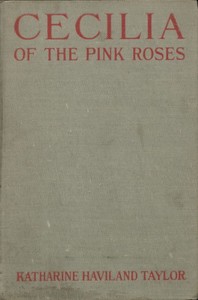
Cecilia of the Pink Roses — Key Ideas to Explore can be approached with a clearer sense of reading commitment from its source measurements: 50,888 words, 3 hr 42 min estimated reading time, and 5 detected text sections.
The text analysis averages about 10.1 words per sentence, while the detected sections provide another way to judge how the source is divided.
Project Gutenberg metadata also associates the work with “Boarding schools -- Fiction,” connecting these edition facts with the source record’s subject description.
Explore this collection
These alternatives are selected using recorded categories and estimated reading time.
About 222 minutes
Historical Psychological Social Fiction
51,054 recorded words. 0 minutes difference from this book's estimate.
View Gutenberg source #54033About 226 minutes
Historical Psychological Social Fiction
51,820 recorded words. 4 minutes difference from this book's estimate.
View Gutenberg source #57613About 215 minutes
Historical Psychological Social Fiction
49,343 recorded words. 7 minutes difference from this book's estimate.
View Gutenberg source #53085Search stored excerpts and compare books → Choose by your preferences →
Choices use stored catalog measurements. Estimates vary with reading speed. A shared category is a catalog label, not a claim that two books have the same argument or literary quality.
Search reads excerpt text stored with this catalog and links to its associated Gutenberg record. The connection is stored in the site database; this tool does not recheck that every excerpt is word-for-word identical to that external record. Excerpt search does not cover every chapter and does not verify historical publication dates.
Catalog snapshot checked: 2026-09-25. Coverage: 97 public books, 97 available source excerpts.
Read the complete public-domain text at its original source.
Read on Project GutenbergThe novel opens not with a grand statement but with the specific, oppressive heat of a tenement flat: frying potatoes, buzzing flies, a torn window shade. Cecilia Madden, aged seven, manages her younger brother and her ailing mother with a practicality that borders on the grim. Her father’s entrance is marked by a grunt and a complaint about sunstruck Italian laborers—a casual racism that signals the social milieu. The first chapter’s title, “Where Is Gawd?,” posed by the child Johnny, sets a tone of unadorned need. This is a world where comfort is scarce and survival demands early maturity.
The excerpts repeatedly anchor emotion in physical specifics. In the opening, the heat, the flies, and the sound of a neighbor beating his child create a texture of relentless discomfort. Later, at a wealthy estate, Cecilia observes Jeremiah’s social missteps—tucking his napkin in his collar, asking the butler to “spare” bread—with a sharp, almost anthropological eye. The narrative voice does not editorialize; it lets the oilcloth table, the crooked shade, and the “smart line of talk” speak for themselves. These details are not decorative but functional: they map the distance between Cecilia’s origins and her aspirations, and they reveal her own acute self-consciousness.
Much of the emotional weight in these passages is carried by what is not said. Cecilia’s father communicates in grunts; her mother’s voice is “feeble” and barely present. When Cecilia tells her father “She ain’t so good,” her eyes fill with tears, but she turns away. Later, on the terrace, K. Stuyvesant’s desire is rendered through physical restraint—“he was utterly humble before his shrine”—and a near-yell of “Great night, isn’t it?” to break the heavy silence. Cecilia’s confession to Father McGowan—“I love him”—is followed by a practical request for a handkerchief. The narrative trusts the reader to read between the lines, where longing, shame, and fear reside.
The excerpts make class a tangible force. Cecilia’s father works with “Dagos” who collapse from heat; Jeremiah’s money talk and napkin fumbling are catalogued as social errors. K. Stuyvesant’s polite avoidance of Cecilia during dinner suggests a gap that cannot be bridged by affection alone. Even Cecilia’s self-deprecation—“I’m—I’m not so very”—reflects internalized hierarchy. The setting shifts from a hot flat to a mansion with a “Greek relief” wall and a view of the Sound, but the emotional landscape remains one of precarious belonging. The novel seems to ask whether a girl from the tenements can ever truly cross that line, and at what cost.
Readers attentive to gesture and omission will find the story’s tension in the spaces between words. Cecilia’s journey is not simply upward mobility but a negotiation of identity, where each social setting demands a different performance. The pink roses of the title may promise beauty, but the thorns—poverty, loss, self-doubt—are never far. Approach this as a character study in which the smallest details carry the largest meanings.
Reading Cecilia of the Pink Roses, I kept returning to that quiet ache of wanting to belong somewhere without losing yourself. It reminded me of another story where time itself felt like a gentle pressure, shaping lives in ways they couldn’t see yet. Perhaps that’s what lingers—the soft inevitability of change. The Wheels of Time — Background and Themes holds that same hush.
Use these questions to collect your thoughts before moving on.