About 222 minutes
Cecilia of the Pink Roses — Key Ideas to Explore
Historical Psychological Social Fiction
50,888 recorded words. 0 minutes difference from this book's estimate.
View Gutenberg source #60099
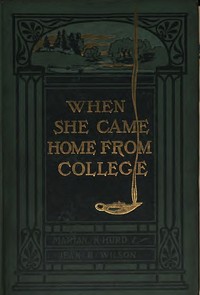
For When she came home from college — A Closer Reading, the stored edition analysis reports 51,054 words, 3 hr 42 min estimated reading time, and 15 detected text sections.
The text analysis averages about 14.5 words per sentence, while the detected sections provide another way to judge how the source is divided.
Project Gutenberg metadata also associates the work with “Domestic fiction,” connecting these edition facts with the source record’s subject description.
Explore this collection
These alternatives are selected using recorded categories and estimated reading time.
About 222 minutes
Historical Psychological Social Fiction
50,888 recorded words. 0 minutes difference from this book's estimate.
View Gutenberg source #60099About 226 minutes
Historical Psychological Social Fiction
51,820 recorded words. 4 minutes difference from this book's estimate.
View Gutenberg source #57613About 215 minutes
Historical Psychological Social Fiction
49,343 recorded words. 7 minutes difference from this book's estimate.
View Gutenberg source #53085Search stored excerpts and compare books → Choose by your preferences →
Choices use stored catalog measurements. Estimates vary with reading speed. A shared category is a catalog label, not a claim that two books have the same argument or literary quality.
Search reads excerpt text stored with this catalog and links to its associated Gutenberg record. The connection is stored in the site database; this tool does not recheck that every excerpt is word-for-word identical to that external record. Excerpt search does not cover every chapter and does not verify historical publication dates.
Catalog snapshot checked: 2026-09-25. Coverage: 97 public books, 97 available source excerpts.
Read the complete public-domain text at its original source.
Read on Project GutenbergThe novel opens with a scene of departure: college seniors dismantling their rooms, the Infant chanting parodies of Tennyson. The narrative voice immediately establishes a split between the characters' performative cheer and their underlying melancholy. Barbara Grafton, the protagonist, is introduced through her sardonic internal commentary—she mentally labels a clubwoman's speech as full of "wind and wave" and notes the sleeping Mrs. Enderby. This voice, at once educated and impatient, sets the tone for a story that will repeatedly juxtapose high-minded ideals with mundane practicalities.
Barbara's thoughts are consistently more caustic than her spoken words. At the Literary Association meeting, she thinks, "Was there ever a human being more frightfully out of her element than I am here!" while outwardly delivering a polished address. The narrator often lets Barbara's private judgments run for several sentences before returning to external action. This technique creates a layered reading experience: the reader is privy to Barbara's skepticism even as she performs the role of a dutiful daughter or earnest reformer. The contrast is especially sharp in the club scene, where the formal program—complete with a paper on "Psychology of the Child"—is undercut by Barbara's awareness of the sleeping audience and the clattering kitchen. The narrative thus uses her internal voice to critique the very social rituals it describes.
The excerpts show a deliberate alternation between brisk dialogue and denser descriptive passages. The opening chapter moves quickly through the characters' banter—the Infant's chants, the nicknames like "Knowledge" and "Sphinx"—then slows to a more measured pace when describing the club meeting. There, the narrator lingers on details: the "subdued hum" of approval, the "rattle of paper napkins," the precise wording of Mrs. Bankson's speech. This shift in tempo mirrors Barbara's own experience of the afternoon as something to be endured. Later, when Barbara delivers her reform-minded address, the prose becomes more urgent, with shorter sentences and direct exclamations: "I call you to new things." The rhythm of the narrative thus reinforces the tension between Barbara's impatience and the slow-moving world she hopes to change.
Even in these early chapters, the narrative voice is attentive to the physical textures of domestic life. The college room is described as "stripped of the pretty portières, cushions, mandolins, and posters"—a list that evokes a specific material culture. At the club, the reader hears the "creak" of the back door and sees Miss Pettibone's face appear. These details ground the story in a sensory reality that contrasts with the abstract language of the clubwomen's papers. Barbara's own thoughts are often triggered by such details: the sight of Mrs. Enderby sleeping, the sound of a cough. The narrative suggests that her idealism will have to contend with these stubborn, everyday realities—a theme that the novel's title and catalog subjects (housekeeping, household employees) promise to develop further.
Readers attentive to voice will find that Barbara's perspective is not static; the excerpts hint at a trajectory from collegiate irony to earnest engagement. The narrative's shifts in pace—from rapid dialogue to lingering description—offer a formal parallel to her own adjustments. As the story moves from the college setting to the home, the tension between Barbara's reformist energy and the entrenched habits of Auburn will likely continue to shape both the plot and the prose.
Reading that editorial note on Barbara’s skepticism toward her hometown, I kept circling back to an older voice with a similar restlessness. There’s something touching about how both women carry their learning like a secret weight, and how the landscape itself seems to argue with their ideals. It reminded me, gently, of The Wild Irish Girl: A National Tale — Key Ideas to Explore, where a stranger’s arrival stirs the same quiet tension between what home means and what it demands.
Save your reaction, strongest insight, and memorable passage.