About 330 minutes
Peter Paragon: A Tale of Youth — Edition Insights
Historical Psychological Social Fiction
75,704 recorded words. 2 minutes difference from this book's estimate.
View Gutenberg source #56932
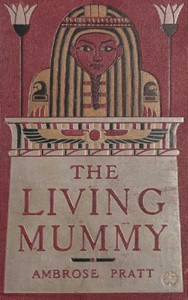
This digital edition of The Living Mummy — A Reader’s Guide is described by source-level measurements including 76,187 words, 5 hr 32 min estimated reading time, and 7 detected text sections.
The text analysis averages about 11.9 words per sentence, while the detected sections provide another way to judge how the source is divided.
Project Gutenberg metadata also associates the work with “Horror tales,” connecting these edition facts with the source record’s subject description.
Explore this collection
These alternatives are selected using recorded categories and estimated reading time.
About 330 minutes
Historical Psychological Social Fiction
75,704 recorded words. 2 minutes difference from this book's estimate.
View Gutenberg source #56932About 334 minutes
Historical Psychological Social Fiction
76,740 recorded words. 2 minutes difference from this book's estimate.
View Gutenberg source #58202About 334 minutes
Historical Psychological Social Fiction
76,617 recorded words. 2 minutes difference from this book's estimate.
View Gutenberg source #58680Search stored excerpts and compare books → Choose by your preferences →
Choices use stored catalog measurements. Estimates vary with reading speed. A shared category is a catalog label, not a claim that two books have the same argument or literary quality.
Search reads excerpt text stored with this catalog and links to its associated Gutenberg record. The connection is stored in the site database; this tool does not recheck that every excerpt is word-for-word identical to that external record. Excerpt search does not cover every chapter and does not verify historical publication dates.
Catalog snapshot checked: 2026-09-25. Coverage: 97 public books, 97 available source excerpts.
Read the complete public-domain text at its original source.
Read on Project GutenbergThe novel begins with an archaeologist in the Libyan desert, interrupted while translating a stele of Amen-hotep III. His irritation at the intrusion gives way to excitement when the visitor proves to be Sir Robert Ottley, a famed Egyptologist. The narrator's reverence for Ottley—described as 'the great Egyptologist,' 'the famous explorer,' and 'the eminent decipherer of cuneiform inscriptions'—establishes a tone of scholarly awe. Yet the setting, a tent in the desert, and the mundane detail of a sleeping donkey undercut the grandeur, hinting at the blend of high-stakes discovery and absurdity that follows.
In a later excerpt, a séance conducted by a medium named Navarro exposes a plot involving Ottley and a Doctor Belleville. The medium, speaking in a trance, reports a conversation between 'the little man' and 'the big man'—likely Ottley and Belleville—who discuss using a mummy named Ptahmes for 'money-making purposes' on the Stock Exchange. They also mention a rival, Pinsent, whom they intend to destroy. The medium's groans and struggle to stay in trance, followed by his angry departure, suggest the séance is both a performance and a genuine ordeal. The listeners—including the narrator, Miss Ottley, and Lady Helen—are left stunned, with Lady Helen's flippant remark about wanting Pinsent to 'say his prayers' providing comic relief that breaks the tension.
The séance transcript reveals that Ptahmes, the mummy, is not merely a relic but an active agent in a scheme. The 'big man' argues that Ptahmes's strength must be conserved for 'two great tasks,' and that they can now make him 'quite invisible.' This supernatural ability is linked to financial manipulation: the little man's 'enormous transactions on 'Change' are attributed to Ptahmes's powers. The dialogue also references a previous conflict with Pinsent on the Nile, where Ptahmes suffered 'three broken ribs,' grounding the fantastical elements in physical consequences. The scheme combines Egyptological lore with modern capitalism, positioning the mummy as a tool for insider trading and murder.
The narrative is told in first person by the archaeologist, whose voice blends scholarly precision with colloquial asides. He describes his discovery with 'wonderfully self-satisfied' pride, then swears 'underbreath' at Ottley's formal calling card. This contrast between academic dignity and everyday irritation persists throughout. The séance scene shifts to a more dramatic, almost theatrical mode, with dialogue reported verbatim and stage directions like 'there was a pause in the narration.' Lady Helen's irreverent humor—'I want to know real badly'—further diversifies the tone. The structure alternates between reflective narration and tense, dialogue-driven scenes, keeping the reader off-balance.
The excerpts juxtapose two settings: the Libyan desert, where the narrator works in a tent and Ottley arrives on a donkey, and the drawing room where the séance occurs. The desert is described with specific details—'the burning sands of Yatibiri,' a stele dated 'B. C., 1382'—while the drawing room is a space of social performance, with footmen and 'pasteboard carte-de-visite.' The mummy Ptahmes bridges these worlds, being both an archaeological object and a supernatural entity. The recurrence of 'invisible' and 'magician' underscores the novel's interest in hidden forces, whether financial or occult. The narrator's initial isolation contrasts with the later crowded séance, suggesting a movement from solitary discovery to entangled conspiracy.
Readers should attend to how the novel balances its Egyptological frame with its thriller elements. The excerpts suggest that the mummy's powers are tied to physical vulnerability—weight loss, broken ribs—which may complicate its role as an invincible tool. The first-person narrator's reliability is worth questioning, as his awe of Ottley and his own self-satisfaction color his account. The séance scene, with its layered dialogue and ambiguous authenticity, rewards close attention to who speaks and who listens.
I found myself thinking about the old hollow tree behind my grandmother’s house, where I once hid a tin of secrets. That weight of buried things returned while reading this guide, a strange echo of when The post-girl first made me feel how quietly a letter can change everything. The post-girl — Story, Setting & Ideas holds a similar hush, like watching someone unwrap a mystery without ever asking for company.
A brief reflection can help important ideas stay with you longer.