About 332 minutes
The Living Mummy — A Reader’s Guide
Historical Psychological Social Fiction
76,187 recorded words. 2 minutes difference from this book's estimate.
View Gutenberg source #58944
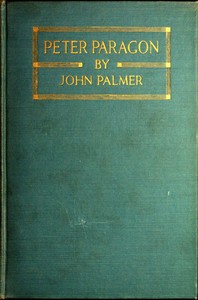
The source record for Peter Paragon: A Tale of Youth — Edition Insights measures this digital text at 75,704 words, 5 hr 30 min estimated reading time, and 8 detected text sections.
The text analysis averages about 11.8 words per sentence, while the detected sections provide another way to judge how the source is divided.
Project Gutenberg metadata also associates the work with “Bildungsromans,” connecting these edition facts with the source record’s subject description.
Explore this collection
These alternatives are selected using recorded categories and estimated reading time.
About 332 minutes
Historical Psychological Social Fiction
76,187 recorded words. 2 minutes difference from this book's estimate.
View Gutenberg source #58944About 334 minutes
Historical Psychological Social Fiction
76,740 recorded words. 4 minutes difference from this book's estimate.
View Gutenberg source #58202About 334 minutes
Historical Psychological Social Fiction
76,617 recorded words. 4 minutes difference from this book's estimate.
View Gutenberg source #58680Search stored excerpts and compare books → Choose by your preferences →
Choices use stored catalog measurements. Estimates vary with reading speed. A shared category is a catalog label, not a claim that two books have the same argument or literary quality.
Search reads excerpt text stored with this catalog and links to its associated Gutenberg record. The connection is stored in the site database; this tool does not recheck that every excerpt is word-for-word identical to that external record. Excerpt search does not cover every chapter and does not verify historical publication dates.
Catalog snapshot checked: 2026-09-25. Coverage: 97 public books, 97 available source excerpts.
Read the complete public-domain text at its original source.
Read on Project GutenbergJohn Palmer's Peter Paragon: A Tale of Youth opens not with its young protagonist but with his parents, a pair sharply contrasted in temperament and ideology. Mrs. Paragon is described as 'mild and immovable,' while Mr. Paragon is a stout, self-taught radical whose bookshelf includes Tom Paine, Godwin, and Voltaire. The catalog lists 'Families' and 'Youth' as subjects, but the early pages dwell more on the father's political bitterness than on domestic life. The narrative voice is detached and ironic, noting that Mr. Paragon 'had naturally adopted extremely bitter views of the world' after a hard life. This framing suggests a novel less concerned with conventional coming-of-age than with the social and psychological forces shaping a young man.
The excerpts devote considerable space to Peter's parents before introducing him directly. Mrs. Paragon is a figure of 'simplicity and peace,' while Mr. Paragon is a caricature of the radical autodidact: he attends a Labour church where Shelley and Samuel Butler are read, and he orates against religion and property. The catalog subject 'England -- Social life and customs' is visible in these details, but the focus is less on broad social panorama than on the father's intellectual milieu. Palmer's prose is precise: Mr. Paragon is 'more Falstaff than Cassius to the eye,' a description that undercuts his revolutionary fervor. The bust of Bradlaugh and the shelf of radical texts are not mere props; they signal a household where political theory competes with domestic reality. Readers should note how the parents' traits are established through concrete objects and habits rather than abstract narration.
A later excerpt shifts abruptly to a violent confrontation. Peter, apparently a young man by this point, fights a man in a shed while a girl watches. The fight is anticlimactic: Peter collapses 'like a sack' after a blow that barely lands. The girl's reaction is complex—she feels 'sensual compassion' and later jealousy when Peter, delirious, murmurs another woman's name. The catalog subject 'Mate selection -- Fiction' is relevant, but the scene is more about possession and power than romantic choice. The girl's attempt to 'still the name upon his lips' by covering his mouth is a striking image of frustrated control. Palmer's handling of the feverish delirium, with Peter 'walking alone in a dark house' and hearing dripping water, suggests a psychological depth that the catalog's generic labels only partly capture. The episode is raw and ambiguous, resisting easy moral judgment.
Throughout the excerpts, Palmer's narrator maintains a cool, analytical tone. Descriptions are often laced with irony: Mr. Paragon's bitterness is attributed to his 'celibate life, insufficiently fed, shabbily clothed' circumstances. The narrator does not endorse or condemn but presents causes and effects. This voice aligns with the catalog's 'Psychological & Social Fiction' category, but the excerpts show a particular interest in how environment shapes character. The fight scene, for instance, is observed with clinical detachment: 'Peter was faint and sick. He saw his fists before him as though they belonged to another.' The girl's jealousy is rendered through physical actions—kneeling, touching, singing—rather than interior monologue. Readers should attend to how Palmer uses external details to imply internal states, a technique that gives the novel its particular texture.
Readers approaching Peter Paragon should expect a narrative that moves between domestic satire and psychological drama. The excerpts offer no clear arc—Peter's birth and his near-fatal fight are separated by unknown events—but the consistency of Palmer's detached, ironic voice suggests a novel more interested in character than plot. The catalog subjects provide a starting point, but the work's real concerns may lie in the tension between radical ideals and human frailty, and in the ways people seek to possess one another.
Reading Peter Paragon, I kept thinking of the quiet menace in Rodmoor: A Romance — Background and Themes. Both stories linger on that strange tension beneath ordinary family life, where love curdles into something sharper. A single violent gesture can echo for pages, like a stone dropped in still water. I suppose that memory of unease stays with me longest.
Use these questions to collect your thoughts before moving on.