About 321 minutes
The adventures of Dr. Thorndyke (The singing bone) — Edition Insights
Historical Psychological Social Fiction
73,704 recorded words. 2 minutes difference from this book's estimate.
View Gutenberg source #59478
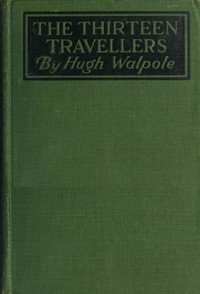
The Thirteen Travellers — Themes and Context can be approached with a clearer sense of reading commitment from its source measurements: 74,080 words, 5 hr 23 min estimated reading time, and 18 detected text sections.
The text analysis averages about 13.8 words per sentence, while the detected sections provide another way to judge how the source is divided.
Project Gutenberg metadata also associates the work with “Short stories, English,” connecting these edition facts with the source record’s subject description.
Explore this collection
These alternatives are selected using recorded categories and estimated reading time.
About 321 minutes
Historical Psychological Social Fiction
73,704 recorded words. 2 minutes difference from this book's estimate.
View Gutenberg source #59478About 330 minutes
Historical Psychological Social Fiction
75,704 recorded words. 7 minutes difference from this book's estimate.
View Gutenberg source #56932About 332 minutes
Historical Psychological Social Fiction
76,187 recorded words. 9 minutes difference from this book's estimate.
View Gutenberg source #58944Search stored excerpts and compare books → Choose by your preferences →
Choices use stored catalog measurements. Estimates vary with reading speed. A shared category is a catalog label, not a claim that two books have the same argument or literary quality.
Search reads excerpt text stored with this catalog and links to its associated Gutenberg record. The connection is stored in the site database; this tool does not recheck that every excerpt is word-for-word identical to that external record. Excerpt search does not cover every chapter and does not verify historical publication dates.
Catalog snapshot checked: 2026-09-25. Coverage: 97 public books, 97 available source excerpts.
Read the complete public-domain text at its original source.
Read on Project GutenbergHugh Walpole's The Thirteen Travellers (1921) is a collection of thirteen short stories linked by their setting in a London apartment building called Hortons. The excerpts show that Walpole uses the building as a stage for social observation, where residents from different classes and backgrounds interact with a mysterious, possibly supernatural figure. The stories range from the 1890s to the post-World War I period, and Walpole's prose is marked by precise physical description—Absalom Jay's "snow-white" hair and "little white tufted Imperial," Lois Drake's "bossy" mouth and athletic bearing—and a psychological intensity that builds toward moments of crisis.
The catalog subjects list "Apartment houses" and "London social life and customs" as themes, and the excerpts confirm that Hortons is more than a backdrop. In the first story, Absalom Jay is introduced as a well-known social figure who "goes everywhere" and knows "more people than anyone else in London." His appearance is meticulously detailed: his clothes are noticed, his hair is white, and he wears an eyeglass on a thick black cord. Later, in "Mrs. Porter and Miss Allen," the setting shifts to a card game in a room where "through the open window shivered the jangled chimes of the bells of St. James's." The building itself becomes a container for social rituals and private terrors. Walpole uses the physical space—attics, flats, windows—to frame encounters that reveal character. Lois Drake's attic, for instance, is described as "amongst the very handsomest flats in London," a detail that undercuts the initial impression of poverty and hints at the social stratification within the building.
Although the catalog does not list supernatural elements, the excerpts clearly involve a ghostly or hallucinatory presence. In "Mrs. Porter and Miss Allen," a figure appears during a card game: "his cruel, evil, supercilious face, conscious of its triumph, bent toward them, his grey clothes hanging loosely about his thin body." The language is visceral—"like an animal about to spring"—and the scene ends with Mrs. Porter's death. The supernatural is not treated as a simple horror device; it is tied to the characters' inner lives. Miss Allen's internal struggle—"I must not turn—I must not look"—and her eventual failure to resist suggest that the ghost is a projection of guilt or fear. Walpole does not explain the phenomenon, leaving it ambiguous whether it is real or psychological. This restraint aligns with the stories' focus on character rather than plot mechanics.
Lois Drake's story, set after the Armistice, introduces a different kind of tension. She is a former W.A.A.C. officer who "believed that women were greatly inferior to men" yet was "indignant did men not fall down instantly and abase themselves before the women of whom she approved." This contradictory attitude reflects the shifting gender roles of the post-war period. Walpole describes her as "born to command other women" and notes her "contempt for her sex." The excerpts do not reveal the plot of her story, but the characterization is pointed: she is "bossy," confident, and accustomed to authority. The catalog subject "English fiction -- 20th century" encompasses these social dynamics, and Walpole's treatment of Lois suggests a critical eye toward the new woman. Her father, a big-game hunter, and her mother, "of no account," further sketch a family hierarchy that Lois has inherited and adapted.
Readers approaching The Thirteen Travellers should attend to the recurring figure that appears across stories—whether a ghost, a hallucination, or a symbol. The excerpts offer only glimpses of this figure, but its presence unifies the collection. Walpole's strength lies in the slow accumulation of detail: a gesture, a piece of clothing, a line of dialogue. The stories reward close reading of these surfaces, beneath which lie anxieties about class, gender, and the fragility of the self.
The rain streaked Hortons’ windows as I finished The Thirteen Travellers, Walpole’s ghosts peeling back each tenant’s polite mask. That damp hush lingered when I reached for another old paperback, its spine cracked, and found a different sort of hidden kingdom waiting. The Saint of the Dragon's Dale: A Fantastical Tale — Story, Setting & Ideas turned the same quiet building’s shadows into something brighter, weirder—just another doorway left ajar.
A brief reflection can help important ideas stay with you longer.