About 177 minutes
The Light Invisible — A Closer Reading
Historical Psychological Social Fiction
40,553 recorded words. 9 minutes difference from this book's estimate.
View Gutenberg source #58433
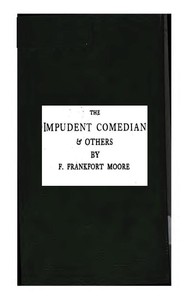
The source record for The Impudent Comedian, & Others — Inside the Classic measures this digital text at 42,694 words, 3 hr 6 min estimated reading time, and 6 detected text sections.
The text analysis averages about 15.7 words per sentence, while the detected sections provide another way to judge how the source is divided.
Project Gutenberg metadata also associates the work with “Historical fiction,” connecting these edition facts with the source record’s subject description.
Explore this collection
These alternatives are selected using recorded categories and estimated reading time.
About 177 minutes
Historical Psychological Social Fiction
40,553 recorded words. 9 minutes difference from this book's estimate.
View Gutenberg source #58433About 174 minutes
Historical Psychological Social Fiction
39,938 recorded words. 12 minutes difference from this book's estimate.
View Gutenberg source #51946About 173 minutes
Historical Psychological Social Fiction
39,729 recorded words. 13 minutes difference from this book's estimate.
View Gutenberg source #51945Search stored excerpts and compare books → Choose by your preferences →
Choices use stored catalog measurements. Estimates vary with reading speed. A shared category is a catalog label, not a claim that two books have the same argument or literary quality.
Search reads excerpt text stored with this catalog and links to its associated Gutenberg record. The connection is stored in the site database; this tool does not recheck that every excerpt is word-for-word identical to that external record. Excerpt search does not cover every chapter and does not verify historical publication dates.
Catalog snapshot checked: 2026-09-25. Coverage: 97 public books, 97 available source excerpts.
Read the complete public-domain text at its original source.
Read on Project GutenbergThe collection opens with Nell Gwyn sweeping into her daughter's house in St. James's Park, her voice carrying through the hall as she calls for "Nelly—Nelly—Nell!" The scene establishes a pattern of movement between interior and exterior spaces—the terrace garden, the landing above the oak stairs, the window overlooking blossoming trees—that recurs throughout these stories. Moore's characters are often caught between private rooms and public view, their entrances and exits timed like stage cues.
The seven stories share a theatrical milieu, populated by actors, managers, and audiences who blur the line between performance and life. In the title story, Nell Gwyn's mother arrives unannounced, and the household's servants already know her history as an orange-seller at Drury Lane. Moore builds his narratives around such moments of recognition, where a character's past intrudes upon the present.
Moore structures each story around carefully timed arrivals and departures. In the title story, Mrs. Gwyn's entrance is announced by her voice before she appears; Nelly's descent down the stairs is accompanied by the musical lilt of a song and the waddling of spaniels. The manager Daly's escape from Mrs. Siddons's green-room leads directly to a tavern scene, where students greet him with acclamation. These transitions are swift and purposeful, often moving from a confined interior (a dressing-room, a green-room) to a more public or convivial space (a tavern, a street). The effect is that of a series of short acts, each with its own setting and cast.
Moore also uses exits to underscore character. When Daly leaves Mrs. Siddons, he mutters "Thank heavens that 's over!" and hurries to Barney Rafferty's tavern. The shift from the tragic actress's high chair to the bar parlor's jorum of punch is abrupt, almost comic. Such juxtapositions suggest that the theatrical world is not confined to the stage but extends into every room and street.
Several stories turn on the gap between a character's public image and private self. In the excerpt featuring Mrs. Siddons, the actress insists on her virtue as a wife and mother, while the manager Daly and the students treat her protestations with amused skepticism. The students' cry of "Well done, Sally, my jewel!" during her soliloquy punctures her tragic dignity, reducing her to a familiar nickname. Moore does not side with either party; instead, he lets the dialogue reveal how reputation is negotiated through performance.
Nell Gwyn's mother, too, is acutely aware of her daughter's fame. She speaks loudly enough for the footmen to hear, knowing they already know her history. The phrase "impudent comedian" (from Evelyn's diary) hangs over the story, a label that Nelly both accepts and subverts. Moore's characters are constantly being watched, judged, and remembered—by servants, by students, by posterity.
Moore anchors his scenes with a few vivid, repeated details. In the opening story, the "fat spaniels" that lazily leave their cushion and waddle toward Nelly reappear in other contexts as emblems of domestic comfort and indolence. Nelly's brown hair in "short ringlets" that dance "as if they were knowing little sprites" is a striking image of vitality. The ringlets are described as having a life of their own, much like the characters' reputations.
Punch—specifically a "jorum of punch"—appears as a social lubricant in the tavern scene. Daly's cry for a jorum after his encounter with Mrs. Siddons links the green-room's tension to the tavern's release. These recurring objects (spaniels, ringlets, punch) are not symbolic in a heavy-handed way; they function as sensory anchors that give each story a tactile, lived-in quality.
Moore advances his plots almost entirely through dialogue. In the excerpts, narrative description is minimal; the story unfolds through what characters say and how they say it. Mrs. Gwyn's blunt "You lie, knave!" and Nelly's quick retort about money establish their relationship in a few lines. The exchange between Daly and Mrs. Siddons is a miniature drama of politeness and mockery, with Daly's exaggerated apologies and Mrs. Siddons's tragic posturing.
The dialogue is also marked by period flavor—"i' faith," "sirrah," "by the powers"—but Moore uses it sparingly, avoiding pastiche. The students' banter in the tavern, with its references to "King Cambyses' vein" and the "Queen of Tragedy," shows that Moore expects his readers to recognize the literary and theatrical allusions. The stories move quickly because the dialogue carries the weight of exposition, characterization, and conflict.
Readers approaching these stories should attend to the spaces between scenes—the staircases, taverns, and green-rooms where characters pause before their next entrance. Moore's theatrical background (he wrote plays as well as fiction) is evident in his handling of timing and voice. The collection rewards attention to how each story opens and closes, often with a door swinging shut or a glass being raised. The pleasure lies in watching these historical figures step out of the portrait and into conversation.
I’ve shelved both for decades, and it strikes me how The Impudent Comedian lingers on a woman’s mask, the gap between her curtsey and her solitude. That old ache of personhood seems to echo, quiet as dust, in The Gates of Dawn — Story, Setting & Ideas. Two different centuries, yet the same half-lit doorway—a figure pausing before stepping out of the wings.
A brief reflection can help important ideas stay with you longer.