About 750 minutes
Ombra — A Reader’s Guide
Historical Psychological Social Fiction
172,362 recorded words. 31 minutes difference from this book's estimate.
View Gutenberg source #53583
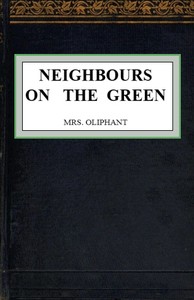
This digital edition of Neighbours on the Green — A Reader’s Guide is described by source-level measurements including 179,532 words, 13 hr 1 min estimated reading time, and 14 detected text sections.
The text analysis averages about 17.3 words per sentence, while the detected sections provide another way to judge how the source is divided.
Project Gutenberg metadata also associates the work with “Short stories,” connecting these edition facts with the source record’s subject description.
Explore this collection
These alternatives are selected using recorded categories and estimated reading time.
About 750 minutes
Historical Psychological Social Fiction
172,362 recorded words. 31 minutes difference from this book's estimate.
View Gutenberg source #53583About 850 minutes
Historical Psychological Social Fiction
195,318 recorded words. 69 minutes difference from this book's estimate.
View Gutenberg source #59144About 682 minutes
Historical Psychological Social Fiction
156,672 recorded words. 99 minutes difference from this book's estimate.
View Gutenberg source #59138Search stored excerpts and compare books → Choose by your preferences →
Choices use stored catalog measurements. Estimates vary with reading speed. A shared category is a catalog label, not a claim that two books have the same argument or literary quality.
Search reads excerpt text stored with this catalog and links to its associated Gutenberg record. The connection is stored in the site database; this tool does not recheck that every excerpt is word-for-word identical to that external record. Excerpt search does not cover every chapter and does not verify historical publication dates.
Catalog snapshot checked: 2026-09-25. Coverage: 97 public books, 97 available source excerpts.
Read the complete public-domain text at its original source.
Read on Project GutenbergMargaret Oliphant opens Neighbours on the Green with a narrator who immediately distinguishes between two sisters: Martha is “excellent,” but Ellen—or Nelly—is simply herself, and that is enough. The voice is confiding, almost gossipy, yet precise about social gradations. Dinglefield Green is introduced as a “village orné,” a place where good blood and good connection are more important than wealth. The narrator’s house lies “athwart the bows” of the sisters’ home, a nautical phrase that hints at the Admiral father and at the narrator’s own position as an observer who is also involved.
The first-person narrator of the opening story, “My Neighbour Nelly,” speaks with a warmth that draws the reader into a close circle. She describes the monthly roses as “sweet and so pathetic in autumn, remonstrating always, and wondering why summer should be past.” This personification is not mere decoration; it mirrors her way of reading people. She compares certain women to those roses—women who “keep on flowering and blossoming in spite of all.” The tone is unhurried, full of affectionate detail about the green, the houses, and the families. Yet this settled world is carefully stratified: Sir Thomas Denzil’s pedigree is “longer than the Queen’s,” and Mrs. Stoke’s son is now a General. The narrator’s voice, with its asides and gentle judgments, establishes a community where everyone’s history is known and where a single glance can carry a world of meaning.
The excerpt from later in the same story shows a marked change in tempo. The narrator describes a sunny afternoon: “all bright full sunshine, no shadow or mystery to favour the romance.” The sentences are short, almost breathless. Colonel Brentford is outside picking monthly roses for Edith; inside, Lady Isabella sits “silent, waiting.” The narrator watches with “a chill at my very heart.” The language becomes fragmented: “He did not see them. He was getting some of the monthly roses for her… He was a tall man, and he managed it.” When the Colonel enters and sees Lady Isabella, the branch of roses trembles in his hand. The contrast between the calm exterior and the suppressed emotion is sharp. Oliphant builds tension through small physical details—a shiver, a start, a trembling branch—rather than through dramatic statements.
The monthly rose appears twice in the excerpts, each time carrying a different weight. Early in “My Neighbour Nelly,” the narrator uses the rose as a simile for resilient women. Later, the same rose becomes a prop in a scene of romantic tension: the Colonel pulls down a branch for Edith, and the flowers tremble when he sees Lady Isabella. The rose is not merely decorative; it links the narrator’s reflective voice to the unfolding drama. Oliphant uses the natural setting—the green, the verandah, the autumn haze—to frame human interactions. The narrator’s fondness for the monthly rose, and her habit of reading character into flowers, suggests a world where emotion is expressed indirectly, through gesture and symbol. Readers attuned to these recurrences will find the green itself a character, its seasons and plants reflecting the moods of its inhabitants.
Oliphant’s stories reward attention to the spaces between events—the pause before a door opens, the glance that passes unobserved by most. The narrator’s voice, at once intimate and reserved, invites the reader to share in the quiet observation of a community where every encounter carries history. As you read, note how the pace quickens or slows, and how small objects—a rose, a window, a chair—become charged with meaning. The green is a stage, but the real drama is in the silences.
I still think about that monthly rose passage in Neighbours on the Green—how the quietest details carry the heaviest weight. Sometimes a story lingers the way a late afternoon does, unhurried and a little strange. That same feeling follows me through The Saint of the Dragon's Dale: A Fantastical Tale — Story, Setting & Ideas, though it trades garden walls for something wilder, and I find myself grateful for both kinds of hush.
Build a private reading journal entry for this title.