About 138 minutes
The New Abelard: A Romance, Volume 3 (of 3) — Background and Themes
Historical Psychological Social Fiction
31,715 recorded words. 10 minutes difference from this book's estimate.
View Gutenberg source #54857
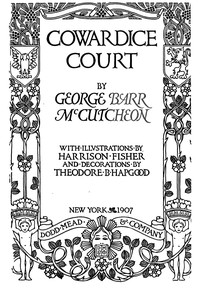
The catalog record for Cowardice Court — A Reader’s Guide provides practical reading context through 29,219 words, 2 hr 8 min estimated reading time, and 4 detected text sections.
The text analysis averages about 12.5 words per sentence, while the detected sections provide another way to judge how the source is divided.
Project Gutenberg metadata also associates the work with “Love stories,” connecting these edition facts with the source record’s subject description.
Explore this collection
These alternatives are selected using recorded categories and estimated reading time.
About 138 minutes
Historical Psychological Social Fiction
31,715 recorded words. 10 minutes difference from this book's estimate.
View Gutenberg source #54857About 118 minutes
Historical Psychological Social Fiction
26,967 recorded words. 10 minutes difference from this book's estimate.
View Gutenberg source #57644About 117 minutes
Historical Psychological Social Fiction
26,861 recorded words. 11 minutes difference from this book's estimate.
View Gutenberg source #54660Search stored excerpts and compare books → Choose by your preferences →
Choices use stored catalog measurements. Estimates vary with reading speed. A shared category is a catalog label, not a claim that two books have the same argument or literary quality.
Search reads excerpt text stored with this catalog and links to its associated Gutenberg record. The connection is stored in the site database; this tool does not recheck that every excerpt is word-for-word identical to that external record. Excerpt search does not cover every chapter and does not verify historical publication dates.
Catalog snapshot checked: 2026-09-25. Coverage: 97 public books, 97 available source excerpts.
Read the complete public-domain text at its original source.
Read on Project GutenbergCowardice Court opens with a dispute over fishing rights, immediately establishing a pattern of trespass that structures the novel's first seven chapters. The dialogue between Lord Bazelhurst and his servant Tompkins reveals not only the lord's irritation but also a telling reliance on the phrase "confound him, don't you know," which McCutcheon uses to mark Bazelhurst's affected Englishness. The narrator's aside that Bazelhurst's assertion of land ownership "was not quite as momentous as it sounded" introduces a wry, deflating tone that recurs throughout the excerpts.
McCutcheon distinguishes characters through their word choices. Lord Bazelhurst's speech is peppered with aristocratic fillers like "confound" and "don't you know," while his wife Evelyn's dialogue is sharp and imperious: "How dare you? How dare you?" The narrator's vocabulary shifts accordingly—describing Evelyn's "green light in her eyes" and her "petted, vain life"—to align with the emotional register of each scene. Penelope, by contrast, speaks in direct, morally charged sentences: "I consider it despicable." These lexical choices create a clear hierarchy of voice without relying on dialect spelling.
The confrontation between Evelyn and Penelope in the bedroom is a set piece of verbal sparring. Evelyn attacks Penelope's supposed affair with Shaw, calling it a "disgraceful affair," while Penelope counters by accusing Evelyn of ordering a shooting. The dialogue is structured as a series of escalating accusations, each speaker interrupting the other. McCutcheon uses dashes and ellipses to convey hesitation and fury: "You—you—" Bazelhurst stammers before collapsing. The scene demonstrates how dialogue in this novel functions less as conversation and more as a means of asserting dominance or exposing vulnerability.
McCutcheon's descriptions are often brief but telling. The Adirondack setting is evoked through a few details: a log dividing property, a river, a tree from behind which a shot is fired. Physical gestures carry emotional weight: Bazelhurst's legs stiffen and shoulders square "in a pitiful attempt at dignity," then he collapses into a chair "bursting into maudlin tears." Evelyn stands "over by the dressing-table" looking "pitilessly." These spare, almost stage-direction-like descriptions leave room for dialogue to carry the narrative, while the setting itself—a country home in the Adirondacks—becomes a stage for imported English manners clashing with American directness.
The chapter titles announce a series of trespasses: a young man, a young woman, a dog, the truth, Dan Cupid, a ghost, and finally the author. This pattern suggests that McCutcheon is self-consciously playing with the idea of boundary violation—physical, social, and narrative. In the excerpts, trespass is literal (fishing on the wrong side of a log) and figurative (Penelope entering Evelyn's room uninvited, Evelyn accusing Penelope of overstepping propriety). The recurring motif gives the novel a playful, almost metafictional structure, as the author himself "trespasses" in the final chapter, perhaps to comment on the artifice of the story.
Readers attentive to McCutcheon's craft will notice how he uses the Adirondack setting not as mere backdrop but as a pressure cooker for social tensions imported from England and America alike. The novel's brevity—under 30,000 words—means that every exchange counts. Pay particular attention to the way characters' speech patterns shift when they are alone versus in company, and how the narrator's ironic asides undercut the melodrama. These choices reveal a writer more interested in the comedy of manners than in straightforward romance or adventure.
Reading this guide’s note on the Adirondack trespass made me recall that chilly autumn I first opened The Bondman: A Story of the Times of Wat Tyler — A Reader’s Guide—same unease, same sense of belonging nowhere. Both books leave that quiet ache of watching people circle each other, never quite touching. Strange how old stories hold that loneliness fresh.
Build a private reading journal entry for this title.