About 115 minutes
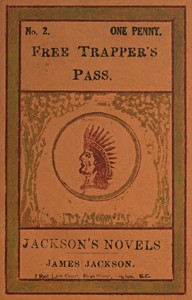
Free Trapper's Pass; or, the Gold-seeker's Daughter! — Context and Discussion
Fairy Tales Myths Imaginary Worlds
26,302 recorded words. 70 minutes difference from this book's estimate.
View Gutenberg source #53422
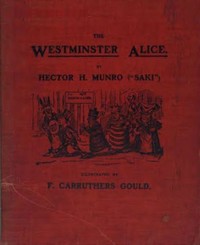
For The Westminster Alice — Reading Notes, the stored edition analysis reports 10,297 words, 45 min estimated reading time, and 2 detected text sections.
The text analysis averages about 16.9 words per sentence, while the detected sections provide another way to judge how the source is divided.
Project Gutenberg metadata also associates the work with “Parody,” connecting these edition facts with the source record’s subject description.
Explore this collection
These alternatives are selected using recorded categories and estimated reading time.
About 115 minutes
Fairy Tales Myths Imaginary Worlds
26,302 recorded words. 70 minutes difference from this book's estimate.
View Gutenberg source #53422About 201 minutes
Fairy Tales Myths Imaginary Worlds
46,064 recorded words. 156 minutes difference from this book's estimate.
View Gutenberg source #58937About 215 minutes
Fairy Tales Myths Imaginary Worlds
49,424 recorded words. 170 minutes difference from this book's estimate.
View Gutenberg source #55222Search stored excerpts and compare books → Choose by your preferences →
Choices use stored catalog measurements. Estimates vary with reading speed. A shared category is a catalog label, not a claim that two books have the same argument or literary quality.
Search reads excerpt text stored with this catalog and links to its associated Gutenberg record. The connection is stored in the site database; this tool does not recheck that every excerpt is word-for-word identical to that external record. Excerpt search does not cover every chapter and does not verify historical publication dates.
Catalog snapshot checked: 2026-09-25. Coverage: 97 public books, 97 available source excerpts.
Read the complete public-domain text at its original source.
Read on Project GutenbergIn The Westminster Alice, Saki (Hector H. Munro) transposes the logic-twisting world of Lewis Carroll onto the corridors of British power, producing a satire that is both sharply topical and enduringly absurd. The opening sketch, “Alice in Downing Street,” immediately establishes the method: the Cheshire Cat points out an “Ineptitude” — a creature “something like a badly-written note of interrogation” — that sits on nothing and speaks only to declare it has no ideas. The parody is precise: Carroll’s dream-logic becomes a vehicle for political critique, with each Wonderland character refashioned to embody a specific governmental type or folly.
Saki’s narrative voice mimics Carroll’s deadpan, inquisitive tone, but the targets are unmistakably Edwardian. Alice’s polite questions — “Can you tell me what you are doing here?” — meet with evasive, pompous replies that echo real political speech. The Cheshire Cat, rude and abrupt, serves as a chorus, puncturing pretension with remarks like “It has never done anything else” when told the Ineptitude never stops talking. The parody extends to physical description: the Ineptitude tries to preen its plumage with whitewash, a detail that suggests both incompetence and a futile attempt at polish. Saki does not need to name names; the caricature is enough to evoke the type.
In “Alice Lunches at Westminster,” Humpty Dumpty recites a poem that parodies official dispatches from the Boer War. Lines such as “They put dead horses in the stream” and “I held the key; it was a bore / I could not hit upon the door” mimic the evasive, self-justifying language of military communiqués. Alice’s response — “it’s very interesting, but I’m afraid it won’t help to cool the atmosphere much” — undercuts the grandiosity. The poem’s meter and rhyme scheme are deliberately clumsy, mirroring the contortions of political logic. Saki uses Carroll’s nonsense verse structure to expose the emptiness behind official rhetoric, turning absurdity into a tool of critique.
The sketches vary in pace, from the static, dialogue-heavy “Alice in Downing Street” to the frantic “Alice in a Fog,” where the White Rabbit scurries past muttering about a missing rhyme for “Cornwall.” The latter passage accelerates through a series of non sequiturs — “You went as came the swallow” — and the Cat’s dry interjections. Saki controls tempo by alternating between set-piece conversations and quick, almost cinematic cuts. In “Alice in a Fog,” the dropped paper and its fragmentary verse create a sense of urgency and confusion, mirroring the fog of political news. This structural variety keeps the satire from becoming monotonous, each sketch finding a different rhythm to match its target.
Readers familiar with Carroll will recognize the scaffolding; those versed in late-Victorian and Edwardian politics will catch the allusions. But the satire works even without full context, because Saki’s targets — evasion, incompetence, self-importance — are perennial. The book rewards attention to its verbal play and structural echoes, and the illustrations by F. Carruthers Gould add another layer of caricature. Approach it as a series of political cartoons in prose, each sketch a quick, pointed jab rather than a sustained narrative.
When I finished The Westminster Alice, I kept thinking how politics turns people into creatures—strange, tangled, half-recognizable. Reading those old satires felt like recalling a conversation I hadn’t finished. Then I found The Coil of Carne — Context and Discussion, and it lingered too, in that same quiet way, like a shape you can’t quite name.
Use these questions to collect your thoughts before moving on.