About 201 minutes
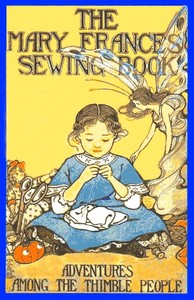
The Mary Frances sewing book — Edition Insights
Fairy Tales Myths Imaginary Worlds
46,064 recorded words. 14 minutes difference from this book's estimate.
View Gutenberg source #58937
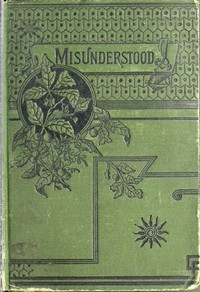
Misunderstood — Text and Context can be approached with a clearer sense of reading commitment from its source measurements: 49,424 words, 3 hr 35 min estimated reading time, and 6 detected text sections.
The text analysis averages about 18.0 words per sentence, while the detected sections provide another way to judge how the source is divided.
Project Gutenberg metadata also associates the work with “Fathers and sons -- Fiction,” connecting these edition facts with the source record’s subject description.
Explore this collection
These alternatives are selected using recorded categories and estimated reading time.
About 201 minutes
Fairy Tales Myths Imaginary Worlds
46,064 recorded words. 14 minutes difference from this book's estimate.
View Gutenberg source #58937About 252 minutes
Fairy Tales Myths Imaginary Worlds
57,785 recorded words. 37 minutes difference from this book's estimate.
View Gutenberg source #52540About 313 minutes
Fairy Tales Myths Imaginary Worlds
71,867 recorded words. 98 minutes difference from this book's estimate.
View Gutenberg source #54795Search stored excerpts and compare books → Choose by your preferences →
Choices use stored catalog measurements. Estimates vary with reading speed. A shared category is a catalog label, not a claim that two books have the same argument or literary quality.
Search reads excerpt text stored with this catalog and links to its associated Gutenberg record. The connection is stored in the site database; this tool does not recheck that every excerpt is word-for-word identical to that external record. Excerpt search does not cover every chapter and does not verify historical publication dates.
Catalog snapshot checked: 2026-09-25. Coverage: 97 public books, 97 available source excerpts.
Read the complete public-domain text at its original source.
Read on Project GutenbergFlorence Montgomery opens Misunderstood with a tightly focused scene: two boys pressed against a nursery window, watching rain that ruins their plan to meet their father at the station. The narrative voice immediately establishes a contrast between the children's eager, conspiratorial perspective and the adult world of rules and caution, embodied by the French governess Virginie and her repeated "Ne faites pas ceci, ne faites pas cela." Montgomery's prose lingers on small details—the dog-cart, old Peter the coachman, the boys' precise list of forbidden actions—to build a world seen from a child's height. The preface explicitly states the book is "not a child's story" but one for adults willing to "view life as it appears to a child," signaling a deliberate narrative strategy of filtering events through young consciousness while retaining an adult narrator's interpretive distance.
Montgomery employs a close third-person narration that frequently adopts the boys' vocabulary and logic. When Humphrey and Miles are left alone, the text reports their judgments as absolute: Virginie "seemed to them a being created on purpose to interfere with every plan of enjoyment." The narrative does not correct this view but lets it stand, inviting readers to inhabit the children's moral universe. This technique extends to the boys' reasoning about consequences. After Miles falls ill, Humphrey "had not begun to be anxious, for Miles had often been ill before, and had always got well again." The narrator reports this as a simple fact of the child's experience, without adult foreshadowing. The effect is a sustained tension between what the child knows and what the reader suspects, a gap that defines the novel's emotional core.
The narrative moves in two distinct rhythms. Early chapters unfold through leisurely, circumstantial descriptions of play: the boys' garden projects, their conversations with Dolly the laundry-maid, the precise planning of her Harvest Home dress. Montgomery devotes paragraphs to Humphrey's suggestion of "crimson and gold" and Dolly's practical doubts about finding such a print. This unhurried pace mirrors the children's own sense of time, where small decisions carry great weight. Later, as Miles's illness progresses, the prose contracts. Sentences shorten: "Miles tossed about all night, and woke next morning with an oppression on his chest." The shift from expansive to compressed narration mirrors the narrowing of possibilities, a structural echo of the story's turn from innocence to consequence.
Montgomery anchors emotional states in physical things. The mustard-and-cress that Humphrey sows for his mother, which comes up too late, becomes a symbol of failed timing and unexpressed love. Dolly remembers him sobbing over it, and the reader is told this story only after the fact, through her memory. The cigar-case that inspires Humphrey's color scheme for Dolly's dress reappears as a touchstone of his aesthetic sense. These objects are not merely decorative; they carry the narrative's emotional history. The green initials "A. D." that mock Humphrey from the garden bed condense grief into a single image. By treating such details with the same seriousness as plot events, Montgomery creates a world where children's attachments to things are as significant as adult concerns, and where misunderstanding often arises from failing to read these material signs correctly.
Readers attentive to shifts in prose rhythm will notice how Montgomery uses pace as a moral instrument: the slow accumulation of happy detail makes the later contraction more devastating. The novel rewards a careful tracking of its recurring objects—the garden, the cigar-case, the print dress—as they accumulate meaning across the narrative. Because the excerpts end before the story's resolution, the reader is left with the open question of whether Humphrey's perspective will ever be fully understood by the adults around him, a tension that the title itself keeps alive.
I remember how Misunderstood — Text and Context lingered on the quiet tragedy of a child’s pure intentions turning opaque to adult eyes. Even years later, such misread souls stay with me. There is a similar ache I find in The Soul Scar: A Craig Kennedy Scientific Mystery Novel — Reading Companion, where hidden scars demand more patient looking than any surface clue allows. Two old friends, really.
Your answers remain private and are stored only in this browser.