About 215 minutes
Misunderstood — Text and Context
Fairy Tales Myths Imaginary Worlds
49,424 recorded words. 14 minutes difference from this book's estimate.
View Gutenberg source #55222
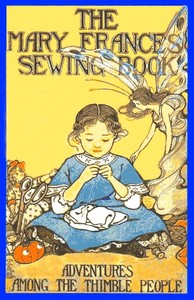
For The Mary Frances sewing book — Edition Insights, the stored edition analysis reports 46,064 words, 3 hr 21 min estimated reading time, and 51 detected text sections.
The text analysis averages about 11.7 words per sentence, while the detected sections provide another way to judge how the source is divided.
Project Gutenberg metadata also associates the work with “Mary Frances (Fictitious character) -- Juvenile fiction,” connecting these edition facts with the source record’s subject description.
Explore this collection
These alternatives are selected using recorded categories and estimated reading time.
About 215 minutes
Fairy Tales Myths Imaginary Worlds
49,424 recorded words. 14 minutes difference from this book's estimate.
View Gutenberg source #55222About 252 minutes
Fairy Tales Myths Imaginary Worlds
57,785 recorded words. 51 minutes difference from this book's estimate.
View Gutenberg source #52540About 115 minutes
Fairy Tales Myths Imaginary Worlds
26,302 recorded words. 86 minutes difference from this book's estimate.
View Gutenberg source #53422Search stored excerpts and compare books → Choose by your preferences →
Choices use stored catalog measurements. Estimates vary with reading speed. A shared category is a catalog label, not a claim that two books have the same argument or literary quality.
Search reads excerpt text stored with this catalog and links to its associated Gutenberg record. The connection is stored in the site database; this tool does not recheck that every excerpt is word-for-word identical to that external record. Excerpt search does not cover every chapter and does not verify historical publication dates.
Catalog snapshot checked: 2026-09-25. Coverage: 97 public books, 97 available source excerpts.
Read the complete public-domain text at its original source.
Read on Project GutenbergThe Mary Frances Sewing Book presents itself as both a story and a manual, a dual identity signaled by its full title: or, Adventures among the Thimble People. The preface addresses “Dear Girls” directly, introducing Mary Frances’s new friends—the Thimble People—who taught her sewing during a summer at her grandmother’s. The catalog places this under “Fairy Tales, Myths & Imaginary Worlds” and also under “Sewing,” “Dollmaking,” and “Needlework.” The excerpts confirm this blend: narrative chapters alternate with numbered instructions, such as a ten-step procedure for sewing on buttons that includes making a pinhole and winding thread under the button. The talking objects—Sewing Bird, Tommy Pin Cushion, Needle Book—behave like characters, with Tommy giggling and Needle Book pretending to sneeze.
The book’s structure is unusual: it is a continuous narrative punctuated by explicit sewing lessons. In the excerpt, a chapter titled “Aunt Maria Makes a Visit” includes a rhyme (“A pinafore, / We’ll make for a doll”) and then, mid-dialogue, a numbered list for “Sewing on Buttons.” The instructions are precise: “Make a pinhole where the button is to be sewed. Thread a No. 7 needle with No. 36 cotton.” The story does not pause for the lesson; instead, the lesson is embedded in the characters’ conversation. After the list, the dialogue resumes with “When does Aunt Maria arrive?” This suggests that the instructional content is meant to be read as part of the adventure, not as a separate appendix. The catalog subject “Fairy Tales” may seem at odds with practical needlework, but the book treats the sewing tools as magical beings, making the lessons part of the fantasy.
The excerpts show that the Thimble People are not mere metaphors; they speak, sing, and have distinct personalities. Sewing Bird is called a “real Fairy Lady” and sings a riddle about a “talking doll.” Tommy Pin Cushion giggles and pretends to step on Scissors Shears’ toes. Needle Book sneezes. These interactions occur during sewing sessions, so the characters are both teachers and companions. The preface warns that the Thimble People “can be of little help to those who dislike them,” and that they behave “in a most contrary manner” toward indifference. This personification aligns with the catalog’s fairy-tale classification, but the excerpts also show that the characters give concrete sewing advice. The book thus uses fantasy to motivate practical learning, a technique that may explain its enduring appeal.
Chapter XXI provides a clear example of how the book blends domestic realism with fantasy. Mary Frances announces that her Aunt Maria is coming, and the Thimble People react with amusement: Tommy giggles, Needle Book sneezes. Aunt Maria is described as a wonderful seamstress who “made a bed quilt when she was two years old.” When she arrives, the sewing lesson is interrupted by the doorbell. The episode includes a full button-sewing tutorial, then returns to the story. This structure suggests that the book expects readers to follow both the plot and the instructions. The catalog subject “Doll clothes” is hinted at by the pinafore project for Mary Marie, Mary Frances’s doll. The excerpts do not reveal the full journey to Thimble Land mentioned in the preface, but they show that the story’s setting—a grandmother’s house, a guest room—grounds the fantasy in a recognizable domestic world.
Readers approaching this book should expect to encounter two intertwined texts: a fairy tale about talking sewing implements and a practical guide to needlework. The catalog’s dual classification under fairy tales and sewing is accurate, but the excerpts show that the instructional content is not secondary—it is woven into the narrative. The book rewards those who read both the story and the lessons, as the Thimble People’s advice is embedded in their dialogue. For a full understanding, one should follow Mary Frances’s progress through the projects, noting how each lesson advances the plot.
Holding this little book, I remembered my grandmother’s worn thimble and the quiet clatter of her button tin. That same stillness—duty and gentle craft—I once found in The Grip of Honor: A Story of Paul Jones and the American Revolution — Themes and Context, where even small stitches of courage held a summer’s worth of waiting. Just a particular hush, that’s all.
Use these questions to collect your thoughts before moving on.