About 313 minutes
The Poacher's Wife — Themes and Context
Fairy Tales Myths Imaginary Worlds
71,867 recorded words. 6 minutes difference from this book's estimate.
View Gutenberg source #54795
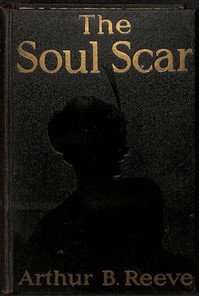
The catalog record for The Soul Scar: A Craig Kennedy Scientific Mystery Novel — Reading Companion provides practical reading context through 73,175 words, 5 hr 19 min estimated reading time, and 23 detected text sections.
The text analysis averages about 13.2 words per sentence, while the detected sections provide another way to judge how the source is divided.
Project Gutenberg metadata also associates the work with “New York (N.Y.) -- Fiction,” connecting these edition facts with the source record’s subject description.
Explore this collection
These alternatives are selected using recorded categories and estimated reading time.
About 313 minutes
Fairy Tales Myths Imaginary Worlds
71,867 recorded words. 6 minutes difference from this book's estimate.
View Gutenberg source #54795About 252 minutes
Fairy Tales Myths Imaginary Worlds
57,785 recorded words. 67 minutes difference from this book's estimate.
View Gutenberg source #52540About 215 minutes
Fairy Tales Myths Imaginary Worlds
49,424 recorded words. 104 minutes difference from this book's estimate.
View Gutenberg source #55222Search stored excerpts and compare books → Choose by your preferences →
Choices use stored catalog measurements. Estimates vary with reading speed. A shared category is a catalog label, not a claim that two books have the same argument or literary quality.
Search reads excerpt text stored with this catalog and links to its associated Gutenberg record. The connection is stored in the site database; this tool does not recheck that every excerpt is word-for-word identical to that external record. Excerpt search does not cover every chapter and does not verify historical publication dates.
Catalog snapshot checked: 2026-09-25. Coverage: 97 public books, 97 available source excerpts.
Read the complete public-domain text at its original source.
Read on Project GutenbergArthur B. Reeve's The Soul Scar opens not with a corpse but with a laboratory complaint: the narrator, Walter Jameson, is trying to write an article on art while Craig Kennedy distills an 'olfactory offense' from a retort. This early juxtaposition—aesthetic refinement versus chemical stench—signals the novel's method. Kennedy's first act is to scrape the sole of Dr. Leslie's shoe, analyzing leather substitutes for footmark identification. The mystery of Vail Wilford's apparent suicide is introduced almost as an afterthought, subordinated to the demonstration of forensic technique. Reeve's prose moves between such clinical specificity and the argot of underworld dealings: 'as sure as the Lord made little apples, I'll shoot if you don't take me up to where you've got the goods.' The reader is placed inside Jameson's limited viewpoint, learning clues as he does.
Reeve's diction oscillates between two registers: the technical jargon of early twentieth-century psychology and the colloquial speech of criminals and operatives. Chapter titles alone announce this hybridity: 'The Freud Theory,' 'The Hesitation Complex,' 'The Psychanalysis,' 'The Association Test,' 'The Lie-detector.' In dialogue, characters speak of 'the usual topic of the evil times into which prohibition was throwing us' and refer to police as 'bulls.' The narrator describes a former operative's 'furtive eyes' and 'low cunning,' while Kennedy's gaze is a 'cold steel eye' that 'seemed to bore right into' his target. This vocabulary creates a world where scientific authority and street-level suspicion coexist uneasily.
The story is told by Jameson, Kennedy's Watson-like chronicler, whose voice is consistently that of a journalist struggling to keep up. He admits his article 'suffered' from the interruption; later, he is 'intent on our own little affair' and fails to notice new arrivals. His descriptions are sensory but limited: he hears a shot 'from the other side of' a door, sees Kennedy's hand 'hidden in his pocket, which bulged as if something metallic were held there.' Reeve never lets Jameson fully understand Kennedy's plans, preserving mystery. The narrator's bewilderment becomes a tool: when the operative asks 'How do I know you come from her?' the pronoun is left dangling, unexplained. Jameson records what he sees without always grasping its significance.
The excerpts reveal a pattern of delayed revelation. The first chapter, 'The Death-dream,' begins with a case that 'looked like a suicide at first' but is immediately qualified: 'I don't know. The thing's a mystery to me.' The narrative then cuts to a laboratory demonstration before returning to the investigation. Later, in the Rascon Agency sequence, the scene is built around a series of withheld identities: the operative is referred to as 'Number 6,' the client is 'her,' and Kennedy's plan is disclosed only in fragments. Reeve uses physical barriers—doors, hallways, the 'burly waiter' blocking the exit—to heighten tension. The shot that rings out 'from the other side of' the door is heard but not seen, forcing the reader to infer action from sound.
Reeve's New York is a city of laboratories, law offices, and back-alley speakeasies. The laboratory is described through its smells and apparatus: a retort, shoe scrapings, 'the composition of some of the products.' The speakeasy is a place of 'furtive eyes,' 'burly bartenders,' and tables where men 'sidled over' and 'eyed us suspiciously.' Prohibition is a recent fact, referenced as 'the evil times' and used as a conversational gambit. The setting is not merely decorative; it determines the kinds of evidence available. Kennedy's forensic work depends on the material culture of 1919—leather substitutes, chemical tests, the new technology of the lie-detector. The city's geography of power is mapped through doors: the office where Wilford died, the hallway where the operative plans his escape, the side entrance through which new arrivals appear.
Readers approaching The Soul Scar should attend to the way Reeve uses Jameson's partial knowledge to control information. The novel rewards attention to its period-specific forensic details—the analysis of shoe scrapings, the association test, the 'Jung method'—but also to its dialogue, where every evasion and half-truth carries weight. The excerpts suggest a story that moves between the clinical and the criminal, with Kennedy as the pivot. The ending, whatever it reveals, is likely to depend on the same careful observation of language and behavior that marks the opening chapters.
There’s something about how that old mystery lingers, that quiet weight of untold motives beneath the science. It reminded me of another story I carried for weeks, the strange gravity of honor during Paul Jones’s revolution — how ideals press on a person long after the last page. The Grip of Honor: A Story of Paul Jones and the American Revolution — Themes and Context felt like that too, a whisper you can’t quite shake.
Capture what you thought, learned, and would like to remember.