About 522 minutes
Bess of the Woods — Background and Themes
Exploration Survival Adventure Tales
119,890 recorded words. 117 minutes difference from this book's estimate.
View Gutenberg source #57758
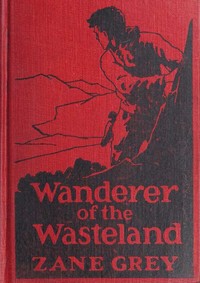
Before opening Wanderer of the Wasteland — A Reader’s Guide, the edition data offers a quick orientation: 146,890 words, 10 hr 39 min estimated reading time, and 35 detected text sections.
The text analysis averages about 13.6 words per sentence, while the detected sections provide another way to judge how the source is divided.
Project Gutenberg metadata also associates the work with “Western stories,” connecting these edition facts with the source record’s subject description.
Explore this collection
These alternatives are selected using recorded categories and estimated reading time.
About 522 minutes
Exploration Survival Adventure Tales
119,890 recorded words. 117 minutes difference from this book's estimate.
View Gutenberg source #57758About 377 minutes
Exploration Survival Adventure Tales
86,621 recorded words. 262 minutes difference from this book's estimate.
View Gutenberg source #54921About 356 minutes
Exploration Survival Adventure Tales
81,839 recorded words. 283 minutes difference from this book's estimate.
View Gutenberg source #51919Search stored excerpts and compare books → Choose by your preferences →
Choices use stored catalog measurements. Estimates vary with reading speed. A shared category is a catalog label, not a claim that two books have the same argument or literary quality.
Search reads excerpt text stored with this catalog and links to its associated Gutenberg record. The connection is stored in the site database; this tool does not recheck that every excerpt is word-for-word identical to that external record. Excerpt search does not cover every chapter and does not verify historical publication dates.
Catalog snapshot checked: 2026-09-25. Coverage: 97 public books, 97 available source excerpts.
Read the complete public-domain text at its original source.
Read on Project GutenbergFrom its first sentence, Wanderer of the Wasteland establishes a landscape that is both physical and moral. The Rio Colorado is described as 'no river to trust,' chafing at its banks and sweeping 'in flood' toward a 'stark and naked upflung wilderness.' This is not merely setting; it is a stage for the protagonist's internal drift. Adam Larey's gaze is 'hard and wondering,' a duality that persists throughout the excerpts. Grey's prose is most effective when it marries action with introspection, as when a near-fall on a loose-rock trail becomes the occasion for a charged exchange about time, memory, and the nature of womanhood. The dialogue here is layered with biblical echoes and poetic quotation, revealing characters who are as much shaped by remembered texts as by the desert around them.
The opening chapter personifies the Rio Colorado with an intensity that goes beyond mere backdrop. It 'chafed at its banks as if to engulf them,' and its muddy, thick current is described as 'sweeping in curves back and forth from Arizona to California shore.' This is a river that resists human control, much like the moral terrain Adam must navigate. Grey’s diction—'majestic and gleaming' yet 'no river to trust'—creates a tension between beauty and danger. The river is not a passive setting but an active force that propels Adam 'to drift away into the desert.' This choice of verb, 'drift,' suggests a surrender to fate rather than a decisive journey, a note that resonates with the novel’s themes of exile and search for redemption.
Grey uses dialogue not merely to advance plot but to expose the inner lives of his characters. In the ledge scene, the woman’s exclamation—'Time—stand still here!'—is immediately questioned by Adam, who senses an unspoken truth. Her response is layered: she admits to a 'mockery of herself,' an 'added regret for what might have been,' and 'the eternal charm of woman who could never separate her personality, her consciousness of her sex, from their old relation to man.' This is a remarkably self-aware speech for a character in a Western adventure, and it reveals Grey’s interest in psychological complexity. Adam’s reply—'I understand. All I ever read has come back to me here on the desert'—ties memory to place, suggesting that the desert functions as a crucible for past learning.
Grey’s descriptions of physical action are precise and carry emotional weight. When Adam catches the woman as she slips on loose rocks, the narrative slows: 'he swung her up as if she had only the weight of a child.' The moment is both heroic and intimate. Yet Grey undercuts the rescue by focusing on the woman’s reaction—her 'large eyes, wide open, exposed to the sky' reflect 'wonder' and 'reverence.' The physical act becomes a catalyst for confession. The woman’s later statement—'the only safe and happy and desired place for her this side of the grave is in the arms of the man she loves'—is startling in its directness. Grey does not shy away from the vulnerability and need that underpin the characters’ interactions, using the desert’s harshness to amplify human fragility.
Memory and quotation are woven into the fabric of the narrative. The woman recalls 'words and lines and verses of the poets' that come to mind 'so vividly out here,' while Adam speaks of Sunday school lessons and Bible verses returning 'as clear as the print on the page.' This shared experience of textual recall creates a bond between them, but also a tension: the woman admits that her words were 'false to the woman in me that you idealize.' Grey uses these literary echoes to suggest that the desert strips away pretense, forcing characters to confront the gap between remembered ideals and present reality. The result is a narrative that is as much about the weight of the past as it is about survival in the wasteland.
Readers attentive to Grey’s craft will find that the desert is never merely a setting; it is a mirror for the characters’ moral and emotional states. The author’s choice to open with a treacherous river and to center a key scene on a precarious ledge signals a world where physical danger and psychological revelation are inseparable. The excerpts suggest that Wanderer of the Wasteland rewards those who read slowly, attending to the weight of a single word or the pause in a conversation. Grey’s prose, at its best, achieves a kind of stark poetry that matches the landscape it describes.
The rain kept pace with the slow dread of that opening chapter—Wanderer of the Wasteland’s Rio Colorado, no river to trust. I set it down on the windowsill, and my eye caught the darker title beside it. There was something in the brother’s exile, that quiet burn of moral reckoning, that echoed differently in The Gray Scalp; Or, The Blackfoot Brave — Background and Themes. I picked it up without deciding to.
Create a short personal record of your experience with this book.