About 159 minutes
Josiah Allen on the Woman Question — Themes and Context
Science Fiction Utopias
36,500 recorded words. 24 minutes difference from this book's estimate.
View Gutenberg source #59283
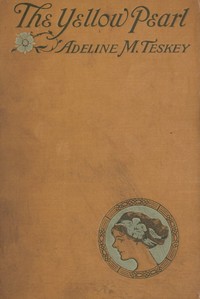
The source record for The Yellow Pearl: A Story of the East and the West — Background and Themes measures this digital text at 30,890 words, 2 hr 15 min estimated reading time, and 4 detected text sections.
The text analysis averages about 20.1 words per sentence, while the detected sections provide another way to judge how the source is divided.
Project Gutenberg metadata also associates the work with “Orphans -- Fiction,” connecting these edition facts with the source record’s subject description.
Explore this collection
These alternatives are selected using recorded categories and estimated reading time.
About 159 minutes
Science Fiction Utopias
36,500 recorded words. 24 minutes difference from this book's estimate.
View Gutenberg source #59283About 54 minutes
Science Fiction Utopias
12,274 recorded words. 81 minutes difference from this book's estimate.
View Gutenberg source #54254About 252 minutes
Science Fiction Utopias
57,915 recorded words. 117 minutes difference from this book's estimate.
View Gutenberg source #56986Search stored excerpts and compare books → Choose by your preferences →
Choices use stored catalog measurements. Estimates vary with reading speed. A shared category is a catalog label, not a claim that two books have the same argument or literary quality.
Search reads excerpt text stored with this catalog and links to its associated Gutenberg record. The connection is stored in the site database; this tool does not recheck that every excerpt is word-for-word identical to that external record. Excerpt search does not cover every chapter and does not verify historical publication dates.
Catalog snapshot checked: 2026-09-25. Coverage: 97 public books, 97 available source excerpts.
Read the complete public-domain text at its original source.
Read on Project GutenbergThe story opens with a diary entry dated March 1st, immediately establishing a first-person voice that is both candid and self-aware. Margaret, the narrator, describes herself as a “mongrel,” the daughter of an American father and a Chinese mother, and recounts overhearing her aunt call her mother a “heathen Chinese.” The diary form allows Teskey to shift between formal exposition and intimate, sometimes playful asides—such as Margaret’s instinctive ability to bathe a baby. This blend of registers creates a narrative that moves from reflective sorrow to brisk, almost comic action.
The novel is structured as a diary, with each entry headed by a date. This format gives the reader direct access to Margaret’s thoughts and feelings, creating an intimate tone. The entries vary in length and pace: some are reflective, while others are brisk and report-like. For instance, the entry for May 22nd begins with a formal phrase—“A most impressive occurrence has transpired, as Mrs. Paton would say”—before launching into a detailed, almost breathless account of meeting Professor Ballington. The diary form also allows for shifts in register, from Margaret’s self-deprecating humor (“I suppose I am what is called a mongrel”) to her defiant pride in caring for a Chinese baby. This structural choice emphasizes the protagonist’s isolation and her need to confide in the page.
Margaret’s narrative voice is distinctive: she is both observant and ironic, often quoting others to highlight their prejudices. She reports her aunt’s remark that “they are all heathens in my estimation” without direct commentary, letting the words speak for themselves. At the same time, she reveals her own wit through asides, such as noting that she “came within one of telling him that I was the only one who could call him pet names in the language he could understand; wouldn’t Aunt Gwendolin have taken a fit?” This layered voice—part innocent, part knowing—creates a tension between her internal world and the external pressures of her grandmother’s home. The excerpts show her using language to navigate between cultures, claiming her own “aptitude” for minding a Chinese baby as a form of defiance.
Teskey varies the pace by alternating between summary and scene. The opening entry compresses Margaret’s journey from China to America into a few paragraphs, then slows to dramatize her arrival and the overheard conversation. Later, the May 22nd entry unfolds in near-real time: Margaret leaves the house, meets the professor, walks to the drug store, and receives instructions. The dialogue is rendered with minimal tags, creating a swift, cinematic quality. The professor’s line—“Why, Miss Pearl! This is a surprise!”—interrupts the narrative flow, marking a shift from solitary reflection to social interaction. These changes in tempo mirror Margaret’s own shifts between passivity and agency, as she moves from being a ward to an active participant in her own story.
Several details recur across the excerpts: the “yellow” skin of Margaret’s mother, the “black chiffon veil” Margaret wears, and the word “Diphtheria” in black letters on a scarlet ground. These visual markers reinforce the theme of visibility and invisibility—Margaret is both seen and not seen, judged by her appearance yet hidden behind her veil. The baby, described as a “slippery little eel,” becomes a symbol of her connection to her mother’s culture. The professor’s mention of Chinese poetry (“One flower hath in itself the charms of two”) introduces a motif of duality that echoes Margaret’s own mixed heritage. These recurring elements give the narrative a cohesive texture, even within the limited excerpts.
Readers should attend to the way Teskey uses the diary form to create a double perspective: Margaret’s present-tense experiences are filtered through her retrospective commentary. The gaps between entries—some days are skipped—invite speculation about what is left unsaid. The excerpts suggest a story that balances social critique with personal growth, but the full arc of Margaret’s journey remains to be discovered in the complete text.
Reading The Yellow Pearl, I remembered sitting on my grandmother’s porch, feeling halves of myself pull apart. Margaret’s quiet diary entries did that—made the ache familiar. Later, Josiah Allen on the Woman Question — Themes and Context brought back that same sense of a voice struggling against a room that wouldn’t listen. Both felt like listening to rain on a window, unhurried and true.
Create a short personal record of your experience with this book.
![Cover of The Search After Hapiness [sic]: A Tale — A Reader’s Guide](https://tefqi.com/storage/media/covers/pg54254.jpg)