About 376 minutes
Bull-dog Drummond: The Adventures of a Demobilised Officer Who Found Peace Dull — Key Ideas to Explore
Science Fiction Utopias
86,301 recorded words. 19 minutes difference from this book's estimate.
View Gutenberg source #49935
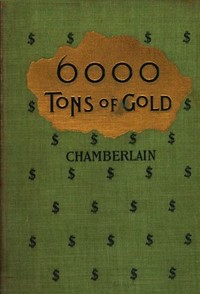
Before opening 6,000 Tons of Gold — Themes and Context, the edition data offers a quick orientation: 82,094 words, 5 hr 57 min estimated reading time, and 7 detected text sections.
The text analysis averages about 18.7 words per sentence, while the detected sections provide another way to judge how the source is divided.
Project Gutenberg metadata also associates the work with “Capitalists and financiers -- Fiction,” connecting these edition facts with the source record’s subject description.
Explore this collection
These alternatives are selected using recorded categories and estimated reading time.
About 376 minutes
Science Fiction Utopias
86,301 recorded words. 19 minutes difference from this book's estimate.
View Gutenberg source #49935About 425 minutes
Science Fiction Utopias
97,748 recorded words. 68 minutes difference from this book's estimate.
View Gutenberg source #53175About 274 minutes
Science Fiction Utopias
62,884 recorded words. 83 minutes difference from this book's estimate.
View Gutenberg source #60331Search stored excerpts and compare books → Choose by your preferences →
Choices use stored catalog measurements. Estimates vary with reading speed. A shared category is a catalog label, not a claim that two books have the same argument or literary quality.
Search reads excerpt text stored with this catalog and links to its associated Gutenberg record. The connection is stored in the site database; this tool does not recheck that every excerpt is word-for-word identical to that external record. Excerpt search does not cover every chapter and does not verify historical publication dates.
Catalog snapshot checked: 2026-09-25. Coverage: 97 public books, 97 available source excerpts.
Read the complete public-domain text at its original source.
Read on Project GutenbergThe novel opens aboard the steamship Elbe in September 1893, introducing two contrasting characters: the American Robert Brent, described with “quiet, self-possessed bearing,” and the Scotchman Duncan Fraser, whose “natural keenness had been sharpened into an intuitive suspicion.” Their shipboard intimacy sets the stage for a tale that quickly moves from personal dynamics to vast financial and scientific schemes.
Chamberlain’s narrative voice is notably detached and analytical, often summarizing events in broad strokes rather than dramatizing them. The catalog subjects—capitalists, Wall Street, gold—are indeed central, but the excerpts show the story is equally concerned with anonymous philanthropy and the public’s reaction to sudden wealth. The gold itself is less a treasure than a catalyst for social and economic disruption.
The first chapter establishes a classic adventure setup: a sea voyage, a mysterious secret, and two men of different backgrounds. Brent is “rather above the medium height” with a face combining “strength, intelligence, and refinement,” while Fraser is “large-boned, sturdy, close-knit.” Their odd intimacy is built on mutual curiosity rather than sympathy. The chapter title, “The Secret of the Cordilleras,” hints at the Andean setting, but the excerpts do not reveal what that secret is. Instead, the narrative focuses on the men’s contrasting worldviews—Brent’s ease in “fin de siècle existence” versus Fraser’s “rough mold.” This opening suggests the novel will use character contrast to explore themes of modernity and tradition, though the incomplete text leaves the secret’s nature unclear.
A later excerpt describes a series of anonymous gifts: $2,000,000 to Wellesley and Vassar, $3,000,000 for a New York library, and $1,000,000 for a Chicago memorial. The narrative voice reports these events with a tone of detached wonder, noting that “no such epidemic of generosity among millionaires had ever been heard of.” The gifts come with a request that funds be used for “those branches of training and study which best fitted woman for the domestic circle,” a phrase the text notes was “construed to admit of almost any interpretation.” This passage shows Chamberlain’s interest in the social impact of wealth, particularly on education and gender roles. The source of the money is hinted to be a New Yorker with a large cash balance at the Chemical Bank, but the secret is kept from the public.
Another excerpt features a character welcoming a gift for aerial navigation with “enthusiasm as a practical pledge of the next and greatest triumph of civilization.” He argues that America lags behind Europe in this field due to a lack of “military incentives.” The speech frames scientific progress as a national competition, with the gift enabling America to “gain the same mastery of the paths of the winds that we have already won over the land and the sea.” This passage ties the novel’s speculative elements to contemporary debates about technology and national pride. The catalog subjects do not mention aviation, indicating that the book’s scope extends beyond finance and gold to include futuristic invention. The excerpts do not reveal whether this aerial project succeeds, but the tone is optimistic and patriotic.
The excerpts suggest 6,000 Tons of Gold is less a straightforward adventure than a novel of ideas, using a fantastic premise to examine real-world anxieties about wealth, secrecy, and progress. Readers should attend to the narrative’s reportorial style, which often summarizes dramatic events rather than staging them. The incomplete text leaves key questions—the source of the gold, the identity of the benefactor, the fate of the aerial project—unanswered, but the book’s interest lies in its period-specific engagement with Gilded Age culture.
That old novel’s anonymous gold gifts kept circling back to me—how sudden wealth changes people without them noticing. It reminded me of another story’s quieter reckonings, where East meets West and the shine wears thin. The Yellow Pearl: A Story of the East and the West — Background and Themes has that same lingering hum, like a coin left on a windowsill long after you’ve walked away.
Use these questions to collect your thoughts before moving on.



![Cover of The Search After Hapiness [sic]: A Tale — A Reader’s Guide](https://tefqi.com/storage/media/covers/pg54254.jpg)