About 357 minutes
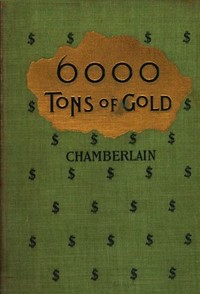
6,000 Tons of Gold — Themes and Context
Science Fiction Utopias
82,094 recorded words. 19 minutes difference from this book's estimate.
View Gutenberg source #58269

Bull-dog Drummond: The Adventures of a Demobilised Officer Who Found Peace Dull — Key Ideas to Explore can be approached with a clearer sense of reading commitment from its source measurements: 86,301 words, 6 hr 16 min estimated reading time, and 12 detected text sections.
The text analysis averages about 14.2 words per sentence, while the detected sections provide another way to judge how the source is divided.
Project Gutenberg metadata also associates the work with “Detective and mystery stories,” connecting these edition facts with the source record’s subject description.
Explore this collection
These alternatives are selected using recorded categories and estimated reading time.
About 357 minutes
Science Fiction Utopias
82,094 recorded words. 19 minutes difference from this book's estimate.
View Gutenberg source #58269About 425 minutes
Science Fiction Utopias
97,748 recorded words. 49 minutes difference from this book's estimate.
View Gutenberg source #53175About 453 minutes
Science Fiction Utopias
104,081 recorded words. 77 minutes difference from this book's estimate.
View Gutenberg source #56432Search stored excerpts and compare books → Choose by your preferences →
Choices use stored catalog measurements. Estimates vary with reading speed. A shared category is a catalog label, not a claim that two books have the same argument or literary quality.
Search reads excerpt text stored with this catalog and links to its associated Gutenberg record. The connection is stored in the site database; this tool does not recheck that every excerpt is word-for-word identical to that external record. Excerpt search does not cover every chapter and does not verify historical publication dates.
Catalog snapshot checked: 2026-09-25. Coverage: 97 public books, 97 available source excerpts.
Read the complete public-domain text at its original source.
Read on Project GutenbergThe novel opens not with its hero but with a puzzle: in December 1918, the manager of a Berne hotel receives a letter from a mysterious Comte de Guy, requesting an elaborate private dinner. The manager's cautious response—consulting his secretary, weighing the risk of a hoax—establishes a tone of worldly suspicion. The prologue thus signals that the story will hinge on hidden identities and orchestrated encounters, a pattern that recurs when Hugh Drummond, a bored ex-officer, places a newspaper advertisement: “Peace is terrible. I am looking for trouble.” The excerpts show a narrative voice that alternates between clipped efficiency and sardonic commentary, especially in Drummond’s banter with his captors.
The catalog subject “World War, 1914-1918 – Veterans – Fiction” is directly reflected in Drummond’s opening gambit: he finds peace dull. Yet the excerpts do not dwell on trauma or reintegration. Instead, the veteran’s restlessness is presented as a taste for danger, a desire to replicate the excitement of war. When captured by Peterson and Lakington, Drummond’s responses are flippant: he complains about a fellow captive’s onion breath and mocks a Bolshevik’s rhetoric. The war is not a source of pathos but a reservoir of skills—and a justification for seeking violent amusement. The text treats demobilization as a problem of insufficient stimulation, not psychological injury.
Peterson and Lakington, the antagonists, speak in a blend of genial menace and clinical detachment. Peterson tells Drummond he might “go mad” overnight, and that “the disposal of corpses … presents certain difficulties—not insuperable—but a nuisance.” This casual tone, paired with Lakington’s barely suppressed rage, creates a distinctive villainous register. The excerpts show the villains as a study in contrasts: Peterson’s smiling cruelty versus Lakington’s snarling threats. The Bolshevik character, introduced as a fanatic, adds a third note of ideological violence. The dialogue thus does more than advance plot; it sketches a spectrum of post-war antagonisms, from the refined sadist to the revolutionary zealot.
The excerpts move from a Swiss hotel to an English country house, but both locations are defined by secrecy and controlled access. The prologue’s hotel manager worries about an unknown count; later, Drummond is held in a house where “you never can tell” what might happen. The settings are not merely backdrops but active elements: the private room, the locked door, the hidden society. The narrative structure, with its prologue and epilogue framing twelve titled chapters, suggests a deliberate, almost theatrical arrangement. The excerpts give no indication of the full plot’s geography, but the repeated emphasis on closed spaces—rooms, houses, roofs—implies a world where danger is always interior, domestic, and hidden.
Readers should attend to the way McNeile uses dialogue to differentiate his large cast: Drummond’s drawling humor, Peterson’s oily politeness, Lakington’s venom, the Bolshevik’s ranting. The excerpts offer no resolution, but they establish a pattern of verbal sparring that may be as central to the novel’s appeal as its action. The catalog category “Science Fiction & Utopias” seems ill-fitting; the text’s concerns are closer to thriller and adventure, with a strong undercurrent of class and political anxiety.
Reading about Drummond’s bored restlessness reminded me of my own post-war quiet—that strange hollowness after everything loud ends. I once found the same ache mirrored in The Search After Hapiness [sic]: A Tale — A Reader’s Guide, where searching itself felt more honest than finding. Both books hum with that particular loneliness, the one we rarely speak aloud.
Create a short personal record of your experience with this book.

![Cover of The Search After Hapiness [sic]: A Tale — A Reader’s Guide](https://tefqi.com/storage/media/covers/pg54254.jpg)