About 135 minutes
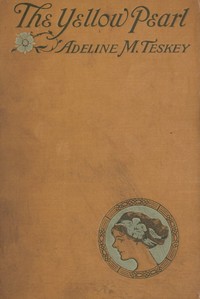
The Yellow Pearl: A Story of the East and the West — Background and Themes
Science Fiction Utopias
30,890 recorded words. 81 minutes difference from this book's estimate.
View Gutenberg source #57473
![Cover of The Search After Hapiness [sic]: A Tale — A Reader’s Guide](https://tefqi.com/storage/media/covers/pg54254.jpg)
For The Search After Hapiness [sic]: A Tale — A Reader’s Guide, the stored edition analysis reports 12,274 words, 54 min estimated reading time, and 2 detected text sections.
The text analysis averages about 36.8 words per sentence, while the detected sections provide another way to judge how the source is divided.
Project Gutenberg metadata also associates the work with “Short stories,” connecting these edition facts with the source record’s subject description.
Explore this collection
These alternatives are selected using recorded categories and estimated reading time.
About 135 minutes
Science Fiction Utopias
30,890 recorded words. 81 minutes difference from this book's estimate.
View Gutenberg source #57473About 159 minutes
Science Fiction Utopias
36,500 recorded words. 105 minutes difference from this book's estimate.
View Gutenberg source #59283About 252 minutes
Science Fiction Utopias
57,915 recorded words. 198 minutes difference from this book's estimate.
View Gutenberg source #56986Search stored excerpts and compare books → Choose by your preferences →
Choices use stored catalog measurements. Estimates vary with reading speed. A shared category is a catalog label, not a claim that two books have the same argument or literary quality.
Search reads excerpt text stored with this catalog and links to its associated Gutenberg record. The connection is stored in the site database; this tool does not recheck that every excerpt is word-for-word identical to that external record. Excerpt search does not cover every chapter and does not verify historical publication dates.
Catalog snapshot checked: 2026-09-25. Coverage: 97 public books, 97 available source excerpts.
Read the complete public-domain text at its original source.
Read on Project GutenbergCharlotte Brontë was thirteen when she wrote The Search After Hapiness, a hand-stitched manuscript dated August 17, 1829. The title page announces it was “Printed by Herself and Sold by Nobody,” a playful boast that signals the private, imaginative world of the Glass Town Confederacy. The story opens with a quarrel at court: Henry O'Donell strikes another nobleman and, after a reluctant apology, falls into a “spell of discontent” that drives him to leave the city. The narrative voice shifts abruptly from this social friction to a wilderness journey, as O'Donell and his companion Alexander Delancy traverse a landscape of “liquid mountains,” lightning, and a forest of purple fruit. The prose is uneven—some passages are breathless lists of sublime phenomena, others linger on a single cave fire—but the young author's ambition to yoke moral quest to romantic scenery is unmistakable.
The text exists in two forms within this edition: a diplomatic transcription that preserves Brontë’s original spelling, capitalization, and punctuation, and a normalized version that regularizes them. The difference is instructive. In the original, sentences run together without periods—“his mind was strong and unbending his disposition uncosiable”—and the word “Hapiness” is misspelled in the title. These features are not errors to be corrected but evidence of a child author working out the conventions of print. The normalized version smooths the reading experience but obscures the tactile, handmade quality of the manuscript. Readers who compare the two will notice how Brontë’s punctuation choices affect pace: the original’s long, unbroken strings mimic the relentless forward motion of O’Donell’s journey, while the edited version inserts pauses that change the rhythm of discovery.
Once O’Donell and Delancy leave the city, the story becomes a catalogue of extreme natural phenomena: “thunder rolling through the sky,” “lightning darting across black clouds,” a “mighty firmament” with a silver globe and a gold globe. The descriptions borrow from the eighteenth-century sublime—Burke’s terror and delight—but Brontë personalizes them. The companions do not merely observe; they listen to thunder, watch lightning shatter rocks, and witness the sun set behind “far distant mountains.” The cave where they settle is described with architectural precision: “tall and stately pillars cut by the hand of nature.” This is not a generic wilderness but a stage for moral choice. O’Donell’s exclamation, “Alexander, let us abide here,” echoes the biblical language of rest after exile, yet the narrative undercuts it by noting they remain “for many long years” in a place where “no sound was to be heard, not even cry of the eagle.” The silence of the grave is both peaceful and ominous.
The story’s pace is erratic. The opening chapter moves quickly through the quarrel, the king’s command, and O’Donell’s altered mood, then slows to a near standstill in the wilderness. Chapter III, set in the cave, consists almost entirely of static tableaux: the companions sit on rocks, watch storms, and retire to bed “with hearts full of joy and thankfulness.” The action is replaced by a ritualized cycle of observation. This change in pace mirrors the thematic shift from social conflict to solitary contentment, but it also creates a structural problem: once happiness is found, the narrative has nowhere to go. The excerpt ends before the story resolves, leaving the reader with a question that the young Brontë may not have fully answered—whether happiness is a destination or a suspension of time. The uneven pacing, far from being a flaw, becomes a clue to the author’s struggle to dramatize a static ideal.
This edition preserves both the original manuscript and a normalized transcription, allowing readers to trace Brontë’s developing control over syntax and punctuation. Pay attention to the leaf numbers in brackets, which link to the original scans; they reveal the physical layout of the handmade book. The story is short enough to read in an hour, but its layers—the Glass Town allegory, the juvenile sublime, the self-published boast—reward a slower, comparative reading. Approach it not as a finished work but as a document of a young writer testing the limits of language and landscape.
In that little tale, the boy Brontë sends two quarrelers into a wilderness to find happiness alone, and the raw spelling feels like a heartbeat. I think of The Search After Hapiness whenever I see silence drawn as a companion, not an absence. There’s a quiet kinship with The man on the other side — Key Ideas to Explore, which also sits with solitude, wondering if the self is found or forfeited there.
Your answers remain private and are stored only in this browser.