
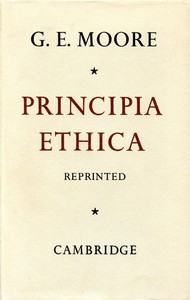
Principia Ethica by G. E. Moore
Forget a plot with characters—this book's story is an argument. G.E. Moore sets out to clear up what he sees as a massive mistake in how people talk about ethics. He says philosophers keep trying to define 'good' by pointing to other things, like pleasure or what's natural. Moore calls this the 'naturalistic fallacy.' His big idea is that 'good' is a basic, simple quality that can't be broken down or defined by anything else. You can't explain yellow to someone who's never seen it; you just have to point. He thinks 'good' works the same way. The rest of the book explores what things in life possess this simple, indefinable quality of goodness.
Why You Should Read It
This book is a brain workout, but in the best way. It forces you to question the shortcuts in your own thinking. When you say something is 'good,' do you just mean it makes you happy? Or that society approves? Moore pushes you to consider that 'good' might be its own unique thing. Reading it feels like having a very patient, very precise friend question every assumption you have about right and wrong. It's not about giving you a list of rules to follow, but about cleaning up the messy foundation those rules are built on.
Final Verdict
This is a classic for a reason, but it's not for everyone. It's perfect for curious readers who enjoy big, abstract puzzles and don't mind dense, careful writing. If you liked the mental challenges of books like 'Sophie's World' or just find yourself arguing about morality with friends, Moore's ideas will give you powerful new tools. Be warned: it's a demanding read. But if you stick with it, you'll likely never think about the word 'good' in quite the same way again.
This historical work is free of copyright protections. You do not need permission to reproduce this work.
Emily Gonzalez
1 month agoI was skeptical about the depth of this book at first, but the concise summaries at the end of each section are a lifesaver. A mandatory read for anyone in this industry.
Thomas Gonzalez
1 year agoI particularly value the technical accuracy maintained throughout.
Susan Perez
5 months agoInitially, I was looking for a specific answer, but the formatting on mobile devices is surprisingly crisp and clear. This should be on the reading list of every serious professional.
David Hernandez
5 months agoI found the author's tone to be very professional yet accessible, it manages to maintain a consistent flow even when discussing difficult topics. Definitely a five-star contribution to the field.









Kimberly Davis
2 months agoI've been looking for a reliable source on this topic, and the author doesn't just scratch the surface but goes into meaningful detail. Definitely a five-star contribution to the field.