
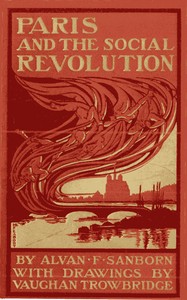
Paris and the Social Revolution by Alvan F. Sanborn
Alvan F. Sanborn gives us a unique view of Paris from the 1880s up to just before World War I. He was there, notebook in hand, watching as socialist and anarchist movements grew from small groups into a major force. The book isn't a straight timeline of events. Instead, it's a collection of scenes and portraits. We meet fiery speakers in Montmartre, see the fallout from bombings and assassinations, and feel the daily anxiety of a city where a political protest could erupt at any moment. Sanborn shows how these radical ideas spread through newspapers, pamphlets, and conversations in smoky bars, challenging the very foundations of French society.
Why You Should Read It
This book brings history to life in a way few others do. Sanborn isn't a distant historian; he's a reporter telling you what he saw and heard. You get the passion, the confusion, and the danger of the era firsthand. His writing makes complex political theories feel human and urgent. It’s fascinating to see how the debates of that time—about workers' rights, wealth inequality, and government power—still echo loudly today. Reading this, you understand that Paris wasn't just a city of lights and art; it was also a boiling pot of radical thought.
Final Verdict
Perfect for anyone who loves Paris beyond the postcards, or for readers curious about the roots of modern political movements. If you enjoy narrative history that reads like compelling journalism, you'll be hooked. It’s not a fast-paced thriller, but a thoughtful, immersive look at a city at its most turbulent. You'll finish it seeing the grand boulevards and quaint cafes in a completely new, and slightly more rebellious, light.
Legal analysis indicates this work is in the public domain. Use this text in your own projects freely.
Kimberly Thompson
1 month agoMy first impression was quite positive because the structural organization allows for quick referencing of key points. A rare gem in a sea of mediocre content.
Kenneth Martinez
1 year agoFrom the very first page, the pacing is just right, keeping you engaged. I learned so much from this.
Joseph Perez
2 years agoGreat digital experience compared to other versions.
Ethan Martinez
1 year agoPerfect.









Christopher Hernandez
3 weeks agoThe layout is perfect for tablet and e-reader devices.