
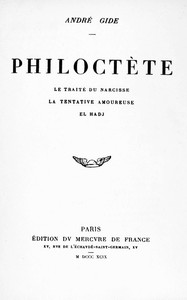
Philoctète : Le traité du Narcisse. La tentation amoureuse. El Hadj by André Gide
This book is a triptych—three separate works bound together, each exploring a clash between personal desire and some higher calling. They're less about plot and more about ideas given flesh through character and situation.
The Story
'The Treatise of the Narcissus' isn't a story in the usual sense. It's a lyrical, philosophical riff on the myth. Gide's Narcissus is an artist-figure. He doesn't just love his reflection in a pool; he becomes obsessed with capturing its perfect image, trying to fix it in art. The core drama is internal: his struggle between living in the real, flowing world and retreating into the perfect, static world of his own creation.
'The Lover's Attempt' is a more conventional narrative. A young man, devout and scholarly, finds his faith and intellectual purity threatened by the sudden, overwhelming pull of earthly love and sensual pleasure. The conflict is between the spirit and the flesh, between a life of disciplined thought and one of passionate feeling.
'El Hadj' shifts gears into satire. It follows a prince on a pilgrimage to Mecca. But his journey is less about piety and more about ego, performance, and the hypocrisies he observes and embodies. The tension here is between the authentic self and the role one plays for society.
Why You Should Read It
I'll be honest, this isn't a breezy read. Gide packs complex thoughts into every sentence. But that's also why it's rewarding. Reading him feels like having a conversation with a brilliantly restless mind. What grabbed me was how 'Narcissus' reframes the artistic struggle. We often think of artists as generous creators. Gide suggests there's a deep, possibly selfish, intoxication in creation—a love affair with the version of the world you shape. It makes you question every book, painting, or even garden you've ever admired. Was this made for me, or was I just invited to watch the artist admire themselves? The other tales extend this question to love, faith, and social identity. It's a short book that leaves a long shadow.
Final Verdict
This is a book for the thoughtful reader, not the plot addict. It's perfect for anyone who loves early modern literature, enjoys philosophical fiction (think a more poetic Camus or a less dense Sartre), or is themselves a creator wrestling with the 'why' behind their work. If you're new to Gide, this collection is a great, concentrated dose of his big themes. Come for the famous myth, stay for the provocative and beautifully written interrogation of what it means to make something—and in doing so, possibly lose yourself.
There are no legal restrictions on this material. It serves as a testament to our shared literary heritage.
Margaret Martinez
5 months agoExtremely helpful for my current research project.
James Anderson
4 months agoI appreciate how this edition approaches the core problem, the evidence-based approach makes it a very credible source of information. This exceeded my expectations in almost every way.
Jennifer Williams
6 months agoBefore I started my latest project, I read this and the practical checklists included are a great touch for real-world use. Definitely a five-star contribution to the field.
Susan Martin
1 year agoMy professor recommended this, and I see why.







Jennifer Martin
1 year agoAs a professional in this niche, the nuanced approach to the central theme was better than I expected. The price-to-value ratio here is simply unbeatable.